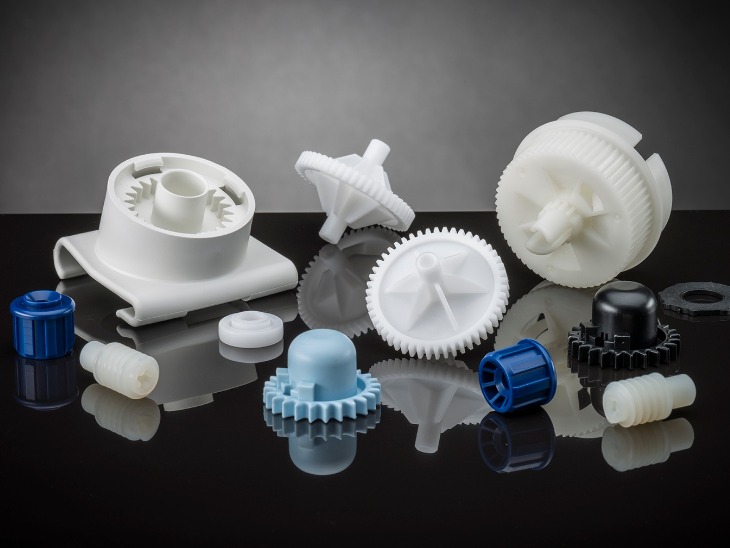
Introduction
Imagine a smartphone case. It has a hard outer shell for protection and a soft inner layer for grip. One part. Two materials. No assembly.
That is multi-shot injection molding . It is an advanced manufacturing process that injects multiple materials or colors into a single mold in successive shots. The result is a unified component with properties that single-shot molding cannot achieve.
Traditional injection molding uses one material per part. Multi-shot molding builds layers. The first shot forms the base. It cools and partially solidifies. Then the second shot—different material, different color—bonds to it. The final product is seamless and functional.
This guide covers how multi-shot molding works, its types, applications across industries, and what you need to know to use it effectively.
How Does Multi-Shot Injection Molding Work?
Step 1: Raw Material Preparation
Materials must be prepared before processing. Different plastics—ABS, PP, PC, and others—are dried to remove moisture. Moisture causes defects like bubbles and poor surface finish.
If ABS contains excess moisture, water vaporizes during injection and creates voids. Proper drying prevents this.
Additives like colorants, fillers, or flame retardants may be mixed with the base material. Uniform distribution ensures consistent properties.
Step 2: Mold Design and Setup
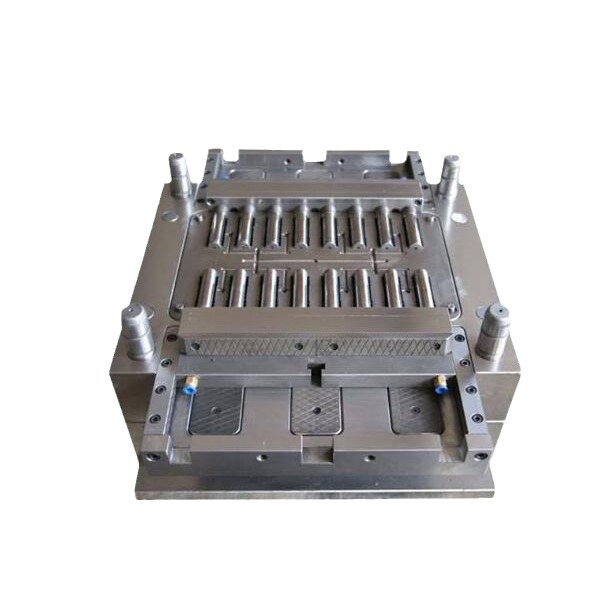
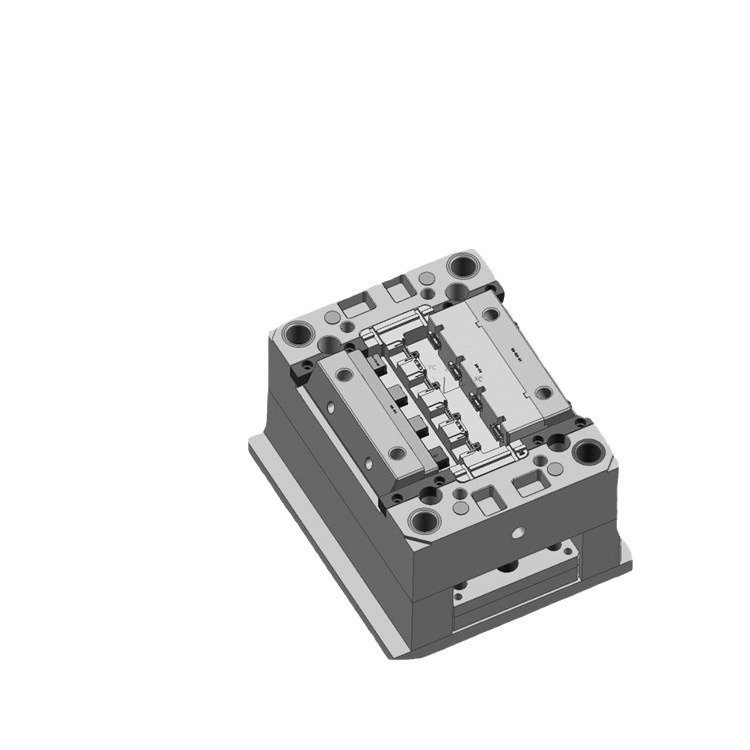
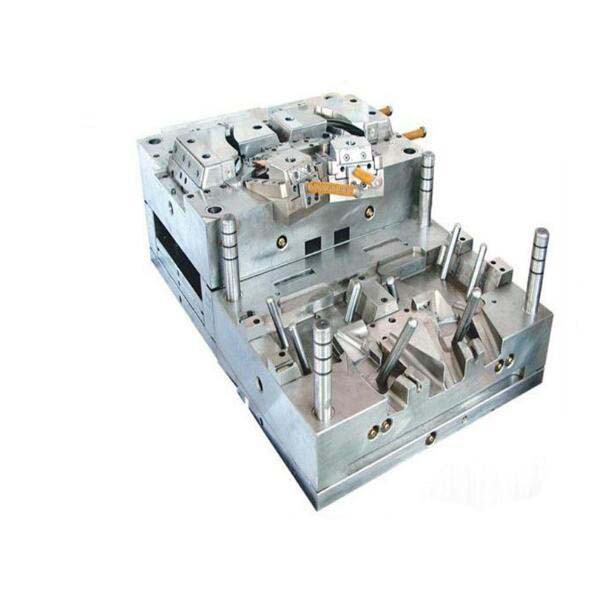
The mold is the heart of multi-shot molding. It must handle multiple injections with precision.
Multi-shot molds typically have:
- Multiple cavities
- Complex gating systems
- Movable cores or slides
In a two-shot mold for a part with a soft-touch outer layer and hard inner core, the mold includes mechanisms to position the first-shot part precisely for the second shot.
The mold is installed on the injection molding machine. Alignment and clamping are verified. Parameters like opening and closing speed are set.
Step 3: First Shot Injection
The first material enters the hopper. It moves into the heated barrel. Heat from heater bands and shear from the rotating screw melt the material.
Molten plastic is forced under high pressure through the nozzle and into the mold cavity.
Injection pressure, speed, and volume are controlled to ensure even filling. No short shots. No over-packing.
For an automotive interior part, the first shot might be rigid plastic forming the basic structure.
Step 4: Cooling and Partial Solidification
After injection, the mold cools. The first material partially solidifies.
Cooling affects dimensional stability and mechanical properties. Water-cooled channels remove heat efficiently.
A thick-walled part needs longer cooling than a thin-walled one. The plastic transitions from molten to semi-solid, retaining the cavity shape.
Step 5: Second (and Subsequent) Shot Injection
When the first material reaches the proper semi-solid state, the second shot injects.
Parameters may differ from the first shot to accommodate the existing semi-solid part. The new material bonds with the first, creating a unified structure.
For multi-color molding, this is where additional colors appear. A children’s toy with a colored outer layer and white inner core gets its color in the second shot.
Step 6: Final Cooling and Solidification
After all shots are injected, cooling continues until the entire part is fully solidified. This ensures required strength and dimensional accuracy.
Step 7: Product Demolding
The mold opens. Ejector pins push the solidified part out. For complex parts or those prone to sticking, air ejection or hydraulic ejection may be used.
Post-processing may include trimming flash, polishing, or assembly.
The table below summarizes the process:
| Step | Key Action | Critical Factors |
|---|---|---|
| Material preparation | Dry materials, mix additives | Moisture content, uniform distribution |
| Mold setup | Install and align mold | Precision alignment, gating systems |
| First shot | Inject first material | Pressure, speed, volume control |
| Cooling | Partially solidify | Cooling time, channel design |
| Second shot | Inject additional material | Bonding, parameter adjustment |
| Final cooling | Fully solidify | Strength, dimensional accuracy |
| Demolding | Eject part | Ejector pins, post-processing |
What Are the Types of Multi-Shot Molding?
Two-Color Injection Molding
This type forms products with two colors. Two injection units inject different colored plastics successively. The materials bond to create a single product with distinct color combinations.
Applications: Mobile phone cases, toys, decorative items. A phone case with a black body and colored border is a typical example.
Multi-Component Injection Molding
This type forms products with multiple materials. Materials with different properties—hardness, flexibility, electrical conductivity—are injected in sequence. Different functions integrate into one part.
Applications: Automotive components, electronic products, medical devices. An automotive interior part combines hard plastic for structure with soft-touch material for feel.
Insert Molding
A pre-formed component—often a metal insert—is placed in the mold before plastic injection. The molten plastic encapsulates the insert, creating a composite part.
Applications: Electrical connectors with metal contacts and plastic housings, tools with metal inserts for strength.
Overmolding
A layer of material—usually softer—is added over a pre-existing part. The pre-existing part may be a previously molded plastic component or another object.
Applications: Soft rubber grips on hard plastic tool handles, protective layers on rigid parts.
The table below compares the types:
| Type | Description | Example |
|---|---|---|
| Two-color | Two colors in one part | Phone case with colored border |
| Multi-component | Multiple materials with different properties | Hard structure with soft-touch surface |
| Insert molding | Plastic molded around pre-formed insert | Electrical connector with metal contacts |
| Overmolding | Soft layer over existing part | Rubber grip on tool handle |
Where Is Multi-Shot Molding Used?
Automotive Industry
Multi-shot molding creates components that combine hard and soft materials.
Door handles: Hard plastic provides structural integrity. Soft-touch material on the gripping area offers better feel.
Interior trims: Decorative layers with different colors or materials.
Exterior components: Parts that combine plastic strength with metal conductivity for advanced lighting systems.
Industry reports indicate about 30% of interior automotive components in modern cars use multi-shot molding.
Electronics Industry
Multi-shot molding is pervasive in electronics.
Smartphone cases: Hard outer shell for protection. Soft inner layer for shock absorption. One part, two functions.
Buttons: Hard plastic base for stability. Soft rubber-like top for tactile feedback.
Keyboard keycaps: Different materials for the main body and printing area, ensuring clear lettering and durability.
Estimates suggest over 70% of high-end smartphone cases use multi-shot molding.
Medical Device Industry
Medical devices demand precision and reliability.
Syringe plungers: Hard plastic body with soft rubber-like tip for better seal.
Catheter components: Different materials for flexibility, biocompatibility, and strength. Outer layer resists body fluids. Inner layer facilitates insertion.
The medical device industry’s demand for multi-shot molded parts is growing at an annual rate of about 8% .
Consumer Goods Industry
Multi-shot molding creates appealing, functional products.
Toys: Hard plastic body with soft rubber wheels in one process.
Kitchen utensils: Hard plastic handle with soft, heat-resistant silicone head.
These products combine functionality with aesthetic appeal.
The table below summarizes applications by industry:
| Industry | Applications | Benefits |
|---|---|---|
| Automotive | Door handles, interior trims, exterior components | Hard/soft combination, aesthetics |
| Electronics | Phone cases, buttons, keycaps | Protection, tactile feel, durability |
| Medical | Syringe plungers, catheters | Seal quality, flexibility, biocompatibility |
| Consumer goods | Toys, kitchen utensils | Multi-color, functional materials |
What Are the Advantages of Multi-Shot Molding?
Reduced assembly: Multiple materials in one part eliminate secondary assembly operations. A smartphone case with hard and soft layers comes out of the mold ready to use.
Stronger bonds: Materials bond chemically during the process. This creates stronger connections than adhesive or mechanical assembly.
Design freedom: Complex geometries and material combinations become possible. Hard structure with soft grip. Rigid core with flexible outer layer.
Improved aesthetics: Multiple colors integrate seamlessly. No painting or secondary finishing required.
Cost efficiency: Higher initial tooling cost, but lower per-part cost when assembly elimination and reduced labor are factored in.
What Does a Real-World Example Look Like?
A medical device manufacturer needed a syringe plunger with specific requirements. The plunger body had to be rigid for force transmission. The tip needed to be soft for a leak-proof seal.
Single-shot molding could not achieve this. Assembly of two separate parts risked seal failure.
Multi-shot molding provided the solution. The first shot was a rigid medical-grade plastic forming the plunger body. The second shot was a soft, biocompatible elastomer forming the tip. The materials bonded during the process.
The result was a single, unified part with no assembly. Seal testing showed zero leakage. The part passed all sterilization requirements. Production efficiency increased by eliminating assembly steps.
Conclusion
Multi-shot injection molding is an advanced manufacturing process that injects multiple materials or colors into a single mold in successive shots. The result is a unified component with properties that single-shot molding cannot achieve.
The process involves material preparation, mold design, sequential injections with partial cooling between shots, and final demolding. Types include two-color molding, multi-component molding, insert molding, and overmolding.
Applications span automotive, electronics, medical, and consumer goods industries. Multi-shot molding reduces assembly, creates stronger bonds, offers design freedom, improves aesthetics, and delivers cost efficiency for complex parts.
For products that need different materials in one seamless component, multi-shot molding is often the best—or only—solution.
FAQ
What is the difference between multi-shot molding and overmolding?
Multi-shot molding uses one machine and one mold with multiple injection units. Materials inject sequentially with mold movement between shots. Overmolding is a subset of multi-shot molding focused on adding a layer of material—usually softer—over a pre-existing part. The pre-existing part may be molded separately or in a previous shot.
What materials can be used in multi-shot molding?
Common materials include ABS, PP, PC, and various elastomers like TPE and silicone. Material pairs must be compatible for bonding. Different materials process at different temperatures, so compatibility must be verified.
Is multi-shot molding cost-effective for low-volume production?
Multi-shot molding requires higher initial investment in specialized machines and complex molds. It is most cost-effective for medium to high volumes where the benefits of reduced assembly and improved performance justify the tooling cost. For low volumes, alternative methods like overmolding with separate parts may be more economical.
How strong is the bond between materials in multi-shot molding?
Bond strength depends on material compatibility and process conditions. When materials are selected for adhesion and processed correctly—with proper temperatures and timing—the bond is typically stronger than adhesive bonding. The materials bond chemically during the semi-solid state of the first shot.
What industries benefit most from multi-shot molding?
Automotive, electronics, medical, and consumer goods industries benefit most. Automotive uses hard/soft combinations for interiors. Electronics uses multi-shot for protective cases and tactile buttons. Medical uses it for seals and flexible components. Consumer goods use it for multi-color, multi-material products.
Contact Yigu Technology for Custom Manufacturing
At Yigu Technology , we specialize in multi-shot injection molding. Our equipment handles complex molds with multiple injection units. Our engineers understand material compatibility and process optimization.
We serve automotive, electronics, medical, and consumer goods industries. From two-color phone cases to multi-component medical devices, we deliver parts that meet demanding requirements.
Contact Yigu Technology today to discuss your multi-shot injection molding project.