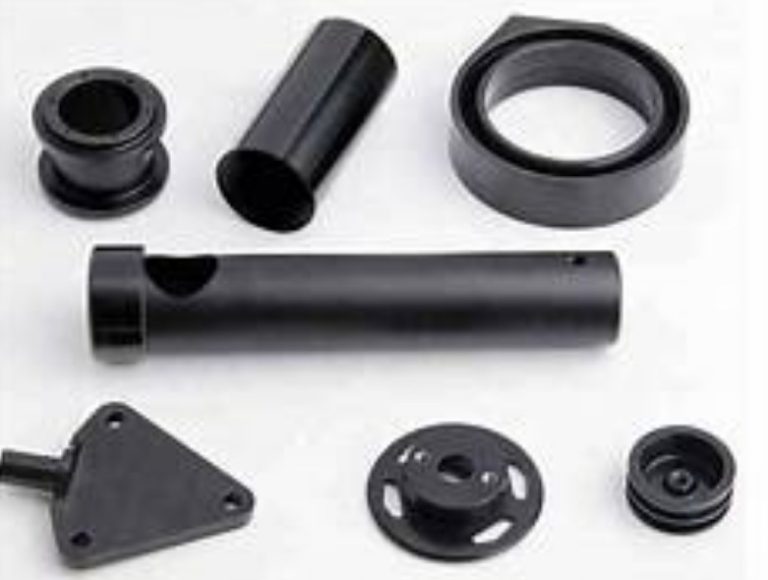
A plastic screw boss might seem like a small detail. But in product design, it often determines whether a device stays together or falls apart. Poor boss design leads to cracked housings, loose connections, and field failures. Good design ensures assembly reliability across thousands of cycles.
This guide covers the essentials of plastic screw boss design—from wall thickness to material selection. You will learn practical rules, see real-world examples, and understand how to avoid common failures. Whether you are designing a smartphone case or an automotive component, these principles apply.
Why Does Screw Boss Design Matter?
The plastic screw boss is the connection point where screws join plastic components. It transfers torque during assembly and axial loads during use. A well-designed boss holds parts securely without cracking. A poorly designed one fails—sometimes immediately, sometimes after months of vibration or temperature changes.
In one project, we received a returned product from a client. The plastic housing had cracked around every screw boss. The original design had sharp internal corners and thin walls. The fix required redesigning the bosses, adding fillets, and increasing wall thickness. The revised version passed 5,000 assembly cycles without failure.
What Are the Key Elements of Boss Design?
Wall Thickness: How Thick Is Enough?
Wall thickness determines how much force a boss can handle. Too thin, and the boss cracks under screw torque. Too thick, and you get sink marks on visible surfaces plus longer cycle times.
For common materials like ABS and polypropylene, follow these guidelines:
| Screw Size | Recommended Wall Thickness |
|---|---|
| M2 – M2.5 | 0.8 – 1.2 mm |
| M3 – M3.5 | 1.0 – 1.5 mm |
| M4 – M5 | 1.5 – 2.0 mm |
The numbers tell a clear story. In testing with ABS and M3 screws, a 0.8 mm wall thickness held a maximum torque of 0.5 N·m before cracking. Increasing to 1.2 mm raised that to 0.8 N·m—a 60% improvement. But going beyond 2 mm added material cost without proportional strength gains.
Important: These values assume consistent wall thickness around the boss. Uneven thickness creates stress points.
Boss Height: How Tall Should It Be?
Boss height determines thread engagement length. More engagement means stronger pull-out resistance. But taller bosses are more vulnerable to side loads.
The standard rule relates height to screw diameter:
| Height Ratio | Application |
|---|---|
| 2–3× screw diameter | Light loads: small electronics, sensor mounts |
| 3–5× screw diameter | Medium loads: laptop frames, appliance housings |
| 5+× screw diameter | Heavy loads: automotive, industrial (requires ribs) |
A client once designed a laptop base with bosses just 1.5× the screw diameter. After 200 open-close cycles, the screws began pulling out. We increased the boss height to 3× diameter and added support ribs. The redesigned unit passed 5,000 cycles with no loosening.
Watch for: Overly tall bosses without rib support. They act like levers and snap under lateral force.
Fillet Radius: The Small Feature That Prevents Cracks
Stress concentrates at sharp corners. When you tighten a screw, the force travels down the boss to its base. A sharp corner acts like a stress riser, initiating cracks.
The solution is a fillet radius at the boss base. Testing confirms the impact:
| Fillet Radius | Cycles to Failure |
|---|---|
| 0 mm (sharp) | 1,000 cycles |
| 0.5 mm | 5,000+ cycles |
| 1.0 mm | 10,000+ cycles |
In our own testing with ABS enclosures, parts with a 0.5 mm fillet remained intact after 1,000 screw cycles. Identical parts with sharp corners showed visible cracks at the boss base after just 200 cycles.
Guideline: Use a fillet radius of 0.2–0.5× the boss wall thickness. For a 1.2 mm wall, that means a 0.25–0.6 mm radius.
Boss Diameter: Matching the Screw
The internal hole diameter determines how easily the screw drives and how much material it displaces. For self-tapping screws (most common in plastic assemblies), the hole diameter should be slightly smaller than the screw’s minor diameter.
A common formula:
- Pilot hole diameter = Screw minor diameter + (0.1 to 0.3 mm for material compression)
Too small, and the screw generates excessive stress—cracking the boss. Too large, and thread engagement is weak—screws pull out under load.
For a typical M3 self-tapping screw in ABS:
- Recommended pilot hole: 2.4–2.6 mm
- Too small: below 2.3 mm risks cracking
- Too large: above 2.7 mm reduces pull-out strength
How Do Materials Affect Boss Performance?
Choosing the Right Plastic
Different materials behave differently under screw loads. Some are naturally tough; others are brittle. Some creep over time; others hold torque.
| Material | Strength | Flexibility | Creep Resistance | Common Use |
|---|---|---|---|---|
| ABS | Good | Moderate | Moderate | Consumer electronics, enclosures |
| PC (Polycarbonate) | High | Low | Good | Impact-resistant housings |
| PP (Polypropylene) | Low | High | Poor | Low-cost, flexible parts |
| Nylon (PA) | High | Moderate | Moderate | Mechanical components, gears |
| Glass-filled Nylon | Very high | Low | Excellent | Structural, high-load parts |
| PEEK | Excellent | Low | Excellent | High-temp, high-performance |
Critical warning: Glass-filled materials (over 30–40% glass fiber) become brittle. The fibers create stress concentration points. For screw bosses in glass-filled nylon, we typically:
- Increase wall thickness by 20–30%
- Use larger fillet radii
- Add rib supports
- Consider metal threaded inserts instead
Moisture and Temperature Effects
Materials absorb moisture and expand. Nylon, for example, can absorb 1–2% moisture, swelling the boss. This changes the effective pilot hole diameter and can cause cracking if not accounted for.
Temperature also matters. A boss designed for room-temperature assembly may fail in cold environments where materials become brittle. Or it may loosen in high heat where materials creep.
In one automotive project, we designed bosses for an under-hood component. Operating temperatures ranged from -40°C to 120°C. We used heat-stabilized nylon with 30% glass fill. The bosses incorporated extra wall thickness and metal inserts to handle thermal expansion differences.
What Design Details Prevent Failure?
Adding Ribs for Support
Ribs stabilize tall bosses and distribute loads. Without ribs, a tall boss acts like a cantilever. With ribs, it becomes a rigid structure.
Rib design rules:
- Rib thickness: 50–70% of boss wall thickness
- Rib height: Extend to base of boss
- Rib spacing: Every 90 degrees for symmetrical support
- Rib taper: 0.5–1 degree for mold release
A client’s product had 8 mm tall bosses without ribs. During drop testing, three bosses snapped. Adding four ribs around each boss eliminated the failures entirely.
Counterbores and Chamfers
The screw entry point matters. A sharp edge at the boss opening concentrates stress when the screw first engages. Adding a chamfer or counterbore guides the screw and reduces initial stress.
A 0.5–1.0 mm chamfer at 45 degrees is standard practice. This small detail reduces the risk of boss splitting during automated assembly.
Boss-to-Wall Connections
Where the boss meets the main wall, the transition should be smooth. A sudden change in thickness creates sink marks on the opposite surface—visible defects in cosmetic parts.
Better practice: Use a gusset or gradual transition that distributes the thickness change over distance. This improves both appearance and structural integrity.
How Do Manufacturing Factors Impact Design?
Injection Molding Considerations
Plastic bosses are formed by core pins inside the mold. These pins must be strong enough to withstand injection pressure. Very deep bosses require long core pins, which can bend or deflect.
Practical limits:
- Boss depth-to-diameter ratio: Keep below 10:1 for reliable molding
- Wall thickness consistency: Avoid abrupt changes
- Draft angle: 0.5–1.5 degrees for easy ejection
One design we reviewed had a boss with depth 15× its diameter. The core pin deflected during molding, producing oval holes that failed assembly. The solution was redesigning with support ribs and reducing depth.
Weld Lines and Material Flow
When plastic flows around a core pin, it rejoins on the opposite side. This creates a weld line—a potential weak point. Bosses with weld lines may crack more easily.
To minimize weld line effects:
- Position gates to reduce weld line occurrence
- Increase melt temperature slightly
- Maintain adequate injection pressure
Post-Molding Operations
Some bosses require secondary operations: tapping threads, inserting metal helicoils, or ultrasonic insertion of threaded inserts. Design should accommodate these processes.
For high-stress applications or frequent assembly/disassembly, metal threaded inserts are often better than self-tapping screws. The boss design changes:
- Larger outside diameter to accommodate insert
- Ribs for torque resistance
- Proper clearance for ultrasonic insertion
Common Failure Modes and Solutions
| Failure | Cause | Solution |
|---|---|---|
| Boss cracking during assembly | Wall too thin, sharp corners, material too brittle | Increase wall thickness, add fillets, use tougher material |
| Screw pulling out | Pilot hole too large, boss too short | Reduce pilot hole size, increase boss height |
| Boss splitting along weld line | Poor gate location, low melt temperature | Relocate gate, optimize process parameters |
| Sink marks on opposite surface | Boss wall too thick relative to main wall | Reduce boss wall thickness, add gussets |
| Boss bending under side load | No rib support, boss too tall | Add support ribs, reduce height |
| Torque loss over time | Material creep, especially in PP or PE | Use creep-resistant material, add inserts |
Yigu Technology’s Approach to Boss Design
At Yigu Technology, we treat screw boss design as an integral part of product development. Our engineering team uses 3D simulation software to analyze stress distribution, predict failure points, and optimize geometry before any mold is cut.
For a recent medical device project, the client needed screw bosses that would survive 10,000 assembly cycles without cracking. The material was glass-filled polycarbonate—strong but potentially brittle. We modeled three design iterations:
- Version 1: Standard wall thickness, sharp corners – failed at 800 cycles in simulation
- Version 2: Increased wall thickness, 0.5 mm fillet – passed 5,000 cycles
- Version 3: Added rib supports, optimized gate location – passed 10,000 cycles
The final molded parts matched simulation predictions. The client received first-article samples that passed validation on the first attempt.
We also provide material recommendations based on application conditions. For high-temperature environments, we suggest PEEK or heat-stabilized nylon. For chemical exposure, we evaluate material compatibility. For cost-sensitive applications, we balance performance with economical options like ABS or polypropylene.
Conclusion
Plastic screw boss design requires attention to multiple interconnected factors. Wall thickness must balance strength against manufacturability. Boss height determines thread engagement but requires rib support beyond certain limits. Fillet radii at the base prevent stress cracking. Material selection affects everything from torque capacity to environmental durability.
Start with clear requirements: expected loads, assembly frequency, operating environment, and material constraints. Apply the guidelines in this article as starting points, then validate through simulation or testing. Small design decisions made early—like adding a fillet or adjusting wall thickness—prevent field failures later.
When in doubt, build prototypes and test. A few hours of testing can save months of warranty claims.
Frequently Asked Questions
What is the minimum wall thickness for a plastic screw boss?
For most common thermoplastics like ABS or polycarbonate, minimum wall thickness is 0.8–1.0 mm for small screws (M2–M2.5). For larger screws, increase proportionally. Below these values, the boss will likely crack during assembly.
How do I prevent screw boss cracking?
Use adequate wall thickness, add fillet radii at the base, ensure proper pilot hole sizing, and avoid sharp corners. For glass-filled materials, consider metal inserts. Also control molding parameters—dry the material properly and avoid excessive injection pressure.
Can I use self-tapping screws in glass-filled nylon?
Yes, but with caution. Glass-filled nylon (over 30% glass) is brittle. Increase wall thickness by 20–30%, use larger pilot holes, and consider thread-forming screws rather than thread-cutting types. For critical applications, metal inserts are safer.
What is the ideal boss height for my application?
For light loads, 2–3 times screw diameter. For medium loads, 3–5 times. For heavy loads, more than 5 times with rib supports. The right height depends on the required pull-out strength and available space.
When should I use metal threaded inserts instead of self-tapping screws?
Use inserts when: assembly/disassembly occurs frequently, high torque is required, the material is brittle (glass-filled or highly crystalline), or the application involves high temperatures where plastic creeps. Inserts cost more but provide reliable, repeatable threads.
Contact Yigu Technology for Custom Manufacturing
Need help with plastic screw boss design for your next project? At Yigu Technology, we combine engineering expertise with precision manufacturing. Our team reviews your design, recommends material and geometry improvements, and produces reliable components that assemble correctly—every time.
From consumer electronics to automotive parts, we have designed and manufactured thousands of screw bosses across every major plastic material. Contact us today to discuss your requirements.