Introduction
Plastic molding manufacturing has transformed the way we make things. It is hard to imagine modern life without it.
Look around. Your smartphone case. The dashboard in your car. The syringe at your doctor’s office. The container holding your food. All of these started as plastic pellets and a mold.
Over 80% of consumer products contain at least one plastic-molded component. This number shows how deeply this manufacturing method has penetrated every industry.
The impact goes beyond just making things. Plastic molding has enabled products that were once impossible. It has made goods lighter, cheaper, and more accessible. It has driven innovation across automotive, medical, electronics, and packaging industries.
This guide explores the revolutionary impact of plastic molding manufacturing. You will learn how it works, what processes exist, and why it matters for the future of manufacturing.
What Is Plastic Molding Manufacturing?
Plastic molding is the process of shaping plastic materials into finished products. It relies on the ability of plastics to change state when heated and to hold shape when cooled.
Plastics are made of polymers —long chains of repeating molecules. When heated, these chains slide past each other. The material becomes fluid. It can flow into a mold. When cooled, it solidifies into the shape of that mold.
This simple concept enables the production of parts ranging from tiny electronic components to large automotive body panels.
What Are the Key Molding Processes?
Injection Molding
Injection molding is the most common process. It produces complex, high-precision parts in large volumes.
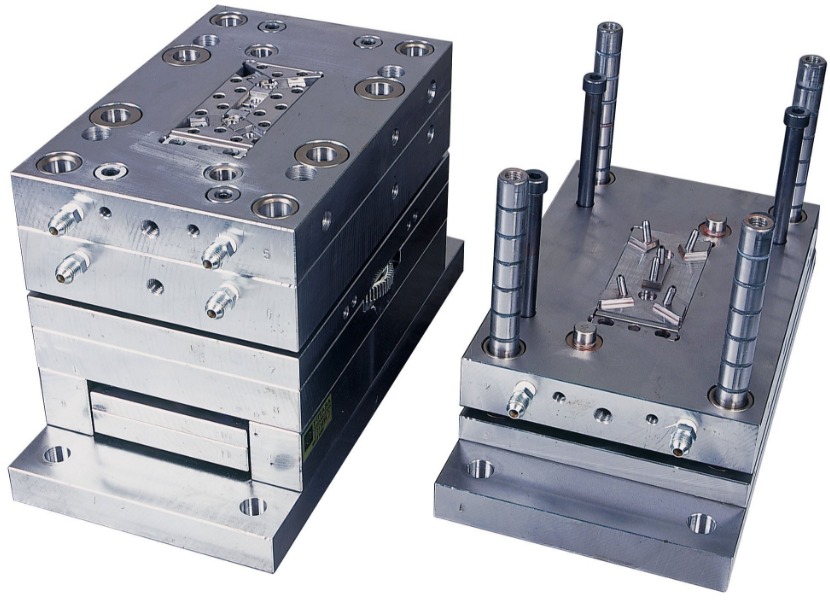
The process starts with plastic pellets fed into a heated barrel. A rotating screw melts the pellets and pushes them forward. When the material is fully melted, the screw moves like a piston. It forces the molten plastic under high pressure into a closed mold cavity.
The plastic cools and solidifies. The mold opens. Ejector pins push the finished part out.
Applications: Smartphone cases, automotive dashboards, medical device housings, toys.
Blow Molding
Blow molding creates hollow plastic products. Two main types exist.
Extrusion blow molding: A tube of molten plastic (parison) is extruded. It is placed inside a mold. Compressed air blows into the tube, expanding it against the mold walls. After cooling, a hollow part emerges.
Injection blow molding: An injection-molded preform is used instead of an extruded parison. This method offers better precision and is used for high-quality containers.
Applications: Plastic bottles, containers, automotive fuel tanks.
Extrusion Molding
Extrusion molding produces continuous profiles with uniform cross-sections. Molten plastic is forced through a die—a shaped opening. The plastic takes the die’s shape as it passes through.
Unlike injection molding, extrusion is a continuous process. It can run indefinitely, producing long lengths of product.
Applications: Pipes, tubing, window frames, plastic sheets.
Compression Molding
Compression molding places a pre-measured amount of plastic into a heated mold. The mold closes, applying pressure. The plastic softens and flows to fill the cavity. Heat cures thermoset materials or melts thermoplastics.
Applications: Large, flat parts like electrical switch plates, some automotive panels, dinnerware.
The table below summarizes key processes:
| Process | How It Works | Best For |
|---|---|---|
| Injection | Melted plastic injected into closed mold | Complex, high-precision parts, high volume |
| Blow | Air expands plastic tube inside mold | Hollow products like bottles |
| Extrusion | Melted plastic forced through die | Continuous profiles: pipes, sheets, tubing |
| Compression | Plastic compressed in heated mold | Large, flat parts, thermosets |
How Has Plastic Molding Revolutionized Industries?
Automotive Industry
Plastic molding has made cars lighter, safer, and more fuel-efficient.
Weight reduction: Plastic parts weigh significantly less than metal equivalents. A lighter car burns less fuel. Every 10% reduction in vehicle weight improves fuel economy by 6% to 8% .
Design freedom: Complex shapes that would be impossible or expensive in metal are routine in plastic. Bumpers, dashboards, and interior trim are now single molded parts rather than assemblies of many pieces.
Safety: Plastics absorb impact energy. Bumpers and interior components protect occupants in collisions.
Medical Industry
Plastic molding has made medical devices affordable, disposable, and precise.
Disposable devices: Syringes, IV components, and surgical instruments are molded at low cost. Single-use devices reduce infection risk.
Precision: Molding produces components with tolerances as tight as ±0.01 mm . This precision is essential for devices like catheters and implantable components.
Biocompatibility: Specialized materials like PEEK and medical-grade silicone meet strict safety standards while being moldable into complex shapes.
Electronics Industry
Plastic molding protects sensitive electronics while enabling sleek designs.
Enclosures: Smartphone cases, laptop housings, and tablet bodies are injection molded. They provide protection, heat dissipation, and aesthetic appeal in one integrated part.
Miniaturization: Micro molding produces tiny components for wearables, hearing aids, and medical sensors. Features as small as 0.1 mm are achievable.
Connectors and switches: Molded plastic housings with metal inserts create reliable electrical connections without assembly.
Packaging Industry
Plastic molding has made packaging lightweight, durable, and cost-effective.
Containers and bottles: Blow molding produces billions of bottles annually. Lightweight and shatterproof, they have replaced glass in many applications.
Closures: Injection-molded caps and lids provide secure seals with tamper-evident features.
Food containers: Molded containers protect food, extend shelf life, and withstand temperature extremes from freezer to microwave.
Consumer Goods
From toys to furniture, plastic molding has made products affordable and durable.
Toys: Complex shapes, bright colors, and safety features are molded in one operation. Production costs are low enough to make toys accessible worldwide.
Household products: Storage containers, kitchen utensils, and furniture components are molded in high volumes at low per-unit cost.
How Has Technology Advanced Plastic Molding?
Automation and Robotics
Automated production lines have transformed the industry.
Robotic part removal: Robots extract parts from molds consistently, without damage. They work continuously, increasing output.
Automated assembly: Molding cells integrate with assembly operations. Parts move from mold to finished product without manual handling.
Material handling: Automated systems dry, mix, and feed materials. This ensures consistency and reduces labor costs.
Smart Manufacturing and Industry 4.0
Sensors and data analytics enable real-time process control.
Process monitoring: Sensors track injection pressure, temperature, and cycle time. Any deviation triggers immediate adjustment.
Predictive maintenance: Machine learning algorithms analyze equipment data. They predict failures before they occur, reducing downtime.
Quality prediction: Statistical models correlate process parameters with part quality. Manufacturers adjust proactively rather than inspecting defects after production.
Advanced Materials
New materials expand what plastic molding can achieve.
High-performance engineering plastics: PEEK, PEI, and other high-temperature materials withstand extreme environments. They enable plastic components in aerospace and downhole oil drilling.
Biodegradable plastics: PLA and other bio-based polymers address environmental concerns. They break down under composting conditions, reducing plastic waste.
Fiber-reinforced composites: Glass and carbon fibers add strength and stiffness. Molded composites replace metal in structural applications.
3D Printing for Tooling
Additive manufacturing accelerates mold development.
Prototype molds: 3D-printed molds enable rapid iteration. Design changes cost little and take days instead of weeks.
Conformal cooling: 3D printing creates cooling channels that follow part contours. Cooling is faster and more uniform, reducing cycle time by 15% to 30% .
Complex geometries: Features impossible with traditional machining become feasible with additive manufacturing.
What Environmental Challenges and Solutions Exist?
Plastic Waste
Plastic waste is a significant environmental concern. Molding contributes to this problem through single-use products and production scrap.
Solutions:
- Recycling: Many molded parts are recyclable. Closed-loop systems capture scrap and reprocess it.
- Biodegradable materials: PLA and other bio-based plastics break down in industrial composting facilities.
- Design for recycling: Molded parts designed with material purity and easy disassembly improve recyclability.
Energy Consumption
Molding processes consume significant energy, primarily for heating and cooling.
Solutions:
- Energy-efficient machines: Newer injection molding machines use servo-driven hydraulics or all-electric drives. They consume 30% to 70% less energy than older machines.
- Process optimization: Shorter cycle times reduce energy per part. Conformal cooling extracts heat faster.
- Renewable energy: Some facilities power operations with solar or wind energy.
Non-Renewable Resources
Most plastics come from fossil fuels. This depletes non-renewable resources and contributes to carbon emissions.
Solutions:
- Bio-based plastics: PLA from corn, sugarcane-based polyethylene, and other bio-based materials reduce fossil fuel dependence.
- Chemical recycling: Advanced recycling technologies break plastics down to monomers, enabling true circularity.
- Lightweighting: Using less material per part conserves resources. Thin-wall molding and optimized designs reduce material consumption by 10% to 30% .
What Does a Real-World Example Look Like?
An automotive supplier needed to reduce the weight of a structural component. The original part was stamped steel. It weighed 3.2 kg .
The solution was a glass-fiber-reinforced polypropylene part molded through injection molding. The new part weighed 1.1 kg —a 66% reduction . It met all strength and durability requirements.
The molded part also reduced assembly complexity. The steel part required three separate stampings and welding. The molded part was a single component with integrated mounting features.
The result was lower vehicle weight, improved fuel efficiency, and reduced manufacturing cost.
Conclusion
Plastic molding manufacturing has revolutionized how products are made. Its impact spans automotive, medical, electronics, packaging, and consumer goods.
Injection molding produces complex, high-precision parts at scale. Blow molding creates hollow containers efficiently. Extrusion delivers continuous profiles. Each process has found its place in modern manufacturing.
Technology continues to advance the field. Automation increases efficiency. Smart manufacturing enables real-time quality control. New materials expand applications. 3D printing accelerates tooling development.
Environmental challenges persist, but solutions are emerging. Recycling, bio-based materials, and energy-efficient processes are reducing the industry’s footprint.
Plastic molding manufacturing will remain a cornerstone of global production. Its ability to deliver complex, lightweight, cost-effective parts is unmatched. As materials and processes evolve, its revolutionary impact will only grow.
FAQ
What are the most common plastic materials used in plastic molding manufacturing?
The most common materials include polyethylene (PE) for packaging, polypropylene (PP) for automotive and household products, polyvinyl chloride (PVC) for pipes and flooring, polystyrene (PS) for disposable products, and polycarbonate (PC) for high-strength, transparent applications. Each material offers specific properties suited to different applications.
How does plastic molding manufacturing contribute to cost-effectiveness in product production?
Plastic molding enables high-volume production, which reduces per-unit cost. Plastics are generally less expensive than metals. Complex shapes are molded in a single operation, reducing assembly steps. Automation lowers labor costs. Together, these factors make plastic molding highly cost-effective for most applications.
What are the environmental challenges associated with plastic molding manufacturing, and how are they being addressed?
The main challenges are plastic waste, energy consumption, and dependence on fossil fuels. Solutions include increased use of recycled and bio-based materials, energy-efficient molding machines, closed-loop recycling systems, and design for recyclability. Chemical recycling technologies are also emerging to enable true circularity.
How has automation changed plastic molding manufacturing?
Automation has increased production efficiency, reduced labor costs, and improved consistency. Robots handle part removal, material handling, and assembly. Automated quality inspection detects defects in real time. Smart manufacturing systems monitor processes and predict maintenance needs, reducing downtime.
What is the difference between injection molding and blow molding?
Injection molding forces molten plastic into a closed mold cavity to produce solid parts with complex geometries. Blow molding uses air to expand a tube of molten plastic against the walls of a mold, producing hollow parts like bottles and containers. Each process is suited to different product types.
Contact Yigu Technology for Custom Manufacturing
At Yigu Technology , we understand the revolutionary impact of plastic molding manufacturing. We apply this technology to deliver custom plastic and metal parts for diverse industries.
Our capabilities include injection molding, overmolding, insert molding, and micro molding. We work with standard and high-performance materials. Our quality systems ensure consistent, reliable parts.
From prototypes to high-volume production, we provide customized solutions that meet your specific requirements.
Contact Yigu Technology today to discuss your custom manufacturing project.