Introduction
You have an idea. Maybe it's a new product you want to prototype, a custom gift for someone special, or a replacement part for something that broke. In the past, turning that idea into a physical object meant expensive tooling, long lead times, and minimum order quantities that made no sense for a single item. Today, 3D printing near you changes everything. Local 3D printing services have democratized manufacturing, putting the power of creation directly into your hands. Whether you're an entrepreneur, designer, hobbyist, or professional, these services can transform your digital designs into real objects—often in days, sometimes in hours. This article explores how 3D printing works, how it compares to traditional manufacturing, and how you can use local services to bring your ideas to life.
What Is 3D Printing and How Does It Work?
The Basics of 3D Printing Technology
3D printing, also called additive manufacturing, creates three-dimensional objects from digital models by adding material layer by layer. This contrasts with traditional methods that cut away material (subtractive manufacturing) or force it into molds (formative manufacturing).
The process follows four key steps:
Step 1: Modeling
Everything starts with a digital 3D model. You create it using CAD software like Fusion 360, SolidWorks, or Blender. Alternatively, you can capture an existing object using a 3D scanner. The model must be watertight—meaning no holes or gaps—and saved in a printable format, typically STL or OBJ.
Step 2: Slicing
Slicing software takes your 3D model and divides it into hundreds or thousands of thin layers. Each layer becomes a set of instructions for the printer. Settings like layer height, infill density, and support structures are determined here. Layer thickness can be as fine as 0.05 mm for high-detail prints or several centimeters for large-scale construction printing.
Step 3: Printing
The printer follows these instructions to build your object. Different technologies do this differently:
- FDM (Fused Deposition Modeling) : A thermoplastic filament melts and extrudes through a nozzle. The nozzle moves in X and Y, depositing material. The platform lowers, and the next layer begins. Common materials: PLA, ABS, PETG, nylon.
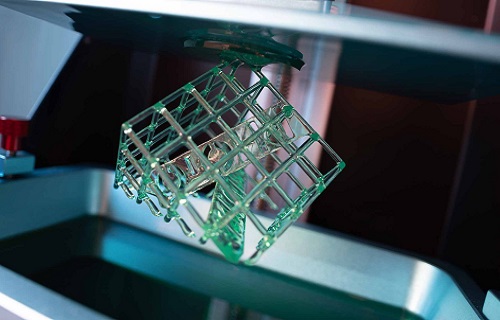
- SLA (Stereolithography) : A UV laser traces each layer on the surface of liquid resin. The resin solidifies where the laser hits. The platform lifts, and fresh resin flows under. Produces smooth, detailed parts.
- SLS (Selective Laser Sintering) : A laser sinters powder particles together. The unsintered powder supports overhangs, eliminating support structures. Common materials: nylon, TPU, some metals.
Step 4: Post-Processing
After printing, parts may need cleaning, support removal, curing (for resin), sanding, or coating. Metal parts might require heat treatment or machining.
Why Local 3D Printing Matters
Having a 3D printing service nearby offers several advantages:
- Faster turnaround: No shipping delays—sometimes same-day service
- Personal interaction: Discuss your project face-to-face
- Lower shipping costs: Pick up locally or pay minimal delivery
- Support local business: Keep manufacturing in your community
- See samples: Visit the facility, examine material samples, assess quality
How Does 3D Printing Compare to Traditional Manufacturing?
Understanding the differences helps you choose the right approach for your project.
| Aspect | 3D Printing | Traditional Manufacturing |
|---|---|---|
| Cost for Small Batches | Low—no tooling required. A single part costs the same as the hundredth. | High—molds and setup costs dominate small runs. A $50,000 mold for 100 parts adds $500 per part. |
| Cost for Large Batches | Higher—per-part cost remains relatively constant. | Low—economies of scale reduce per-part cost dramatically. |
| Personalization | Excellent—each part can be different without cost penalty. | Limited—customization requires new tooling or extensive rework. |
| Design Complexity | Almost unlimited—complexity costs nothing. Internal channels, lattices, organic shapes are easy. | Constrained—complex shapes require multiple steps, special tooling, or are impossible. |
| Material Utilization | High—material only where needed. Waste typically <10%. | Low in subtractive methods—machining can waste 70–90% of material. |
| Lead Time | Days to weeks—prototypes in hours. | Weeks to months—tooling and setup dominate. |
| Surface Finish | Variable—may need post-processing. | Excellent—as-molded or machined finishes. |
| Strength | Good, but can be anisotropic. | Consistent, predictable properties. |
When to Choose 3D Printing
- Low volumes: Under 1,000 parts, especially with complex geometry
- Customization: Each part needs to be different
- Prototyping: Test designs quickly before committing to tooling
- Complex geometry: Internal features, lattices, organic shapes
- Speed to market: No waiting for molds or tooling
When to Choose Traditional Manufacturing
- High volumes: Millions of parts amortize tooling cost
- Simple geometry: No benefit from additive complexity
- Established materials: Exotic alloys may not be printable
- Surface finish critical: Mirror finishes need machining
- Cost sensitive at scale: Injection molding cents per part
What Can You Make with Local 3D Printing?
Prototypes and Product Development
Entrepreneurs and inventors use 3D printing to validate ideas before investing in production. A prototype lets you:
- Test form, fit, and function
- Show investors something real
- Identify design flaws early
- Iterate quickly based on feedback
Real-world example: A startup developing a new kitchen gadget needed multiple design iterations. Each traditional prototype would take weeks and cost thousands. They found a local 3D printing service. Now they iterate weekly, testing improvements immediately. Development time dropped from 12 months to 4.
Custom Manufacturing and Replacement Parts
Businesses use 3D printing for:
- Jigs and fixtures: Custom tools for assembly lines
- Replacement parts: No longer available from manufacturers
- Small-batch production: Limited runs without tooling investment
- Spare parts inventory: Print on demand, no warehousing
Real-world example: A local factory had a machine with a broken plastic gear. The original manufacturer no longer stocked it. A new machine would cost $50,000. They scanned the broken gear, had it 3D printed in nylon, and were back in production in two days. Cost: $200.
Personalized Products and Gifts
Individuals create unique items:
- Custom jewelry: Rings, pendants, bracelets with personal designs
- Phone cases: With names, photos, or custom patterns
- Home decor: Vases, lamps, ornaments tailored to your taste
- Figurines: Characters from your imagination or favorite media
- Gifts: Something truly one-of-a-kind
Real-world example: A customer wanted a wedding gift for friends—a model of their first home together. They found photos, a local designer created a 3D model, and a nearby printing service produced it in high-resolution resin. The couple cried when they opened it.
Education and Research
Schools and universities use 3D printing to enhance learning:
- Biology: Print DNA models, cell structures, organs
- Engineering: Test mechanical designs hands-on
- History: Recreate artifacts for study
- Chemistry: Build molecular models
Real-world example: A high school biology department started using 3D-printed models of cells and organs. Students who learned with physical models scored 15% higher on exams about cell structure compared to those using only textbooks and diagrams.
Art and Design
Artists and designers push creative boundaries:
- Sculptures: Complex forms impossible to carve by hand
- Fashion: Avant-garde dresses with geometric patterns
- Installations: Large-scale works with repeating elements
- Jewelry: Intricate designs with organic shapes
Real-world example: A local art gallery featured an exhibition of 3D-printed sculptures. One artist created organic forms that seemed to grow and flow—impossible to achieve with traditional sculpting. The exhibition drew record attendance and critical praise.
How to Find and Choose a Local 3D Printing Service
What to Look For
Equipment and Technology
- What printers do they have? FDM for large parts? SLA for detail? SLS for durability? Metal for production?
- What build volumes? Can they handle your part size?
- What layer resolution? Thinner layers mean smoother surfaces.
Material Options
A good service offers a range:
| Material Type | Examples | Best For |
|---|---|---|
| Standard Plastics | PLA, ABS, PETG | Prototypes, decorative items, general use |
| Engineering Plastics | Nylon, Polycarbonate | Functional parts, durable components |
| Flexible Materials | TPU, TPE | Gaskets, soft-touch parts, flexible prototypes |
| Resins | Standard, tough, castable, dental | High-detail models, jewelry, medical |
| Metals | Stainless steel, titanium, aluminum | Production parts, aerospace, medical |
Portfolio and Experience
- Have they done projects like yours?
- Can they show examples?
- Do they have experience in your industry?
Reviews and Reputation
- What do previous customers say?
- Check Google Reviews, Yelp, industry forums
- Look for consistent praise about quality and reliability
Turnaround Time
- How long from order to delivery?
- Do they offer rush services?
- Can they meet your deadline?
Pricing
- Transparent quotes with no hidden fees
- Compare multiple providers
- Remember: cheapest isn't always best—quality matters
Location
- How close are they?
- Can you visit in person?
- What are pickup/delivery options?
Questions to Ask Before Ordering
- What file formats do you accept? (STL, OBJ, STEP, etc.)
- Can you review my file for printability before I commit?
- What materials do you recommend for my application?
- What post-processing options do you offer?
- What is your typical turnaround time?
- Do you offer design assistance if I need help?
- Can you provide a firm quote based on my file?
- What happens if the print fails or doesn't meet specifications?
A reputable service will answer these questions clearly and help you understand the process.
How to Prepare Your 3D Model for Printing
File Format and Settings
Most services accept STL files. Export with:
- Binary format (smaller file size)
- Resolution appropriate for your part—high enough to capture details, but not so high that file becomes enormous
- Units specified (mm or inches)
Some services also accept OBJ, 3MF, or native CAD files like STEP.
Model Requirements
For successful printing, your model must be:
- Watertight: No holes or gaps—a closed solid
- Manifold: Every edge connects exactly two faces
- Properly oriented: Orientation affects strength, surface finish, and supports
- Correct scale: Check units—a model in inches interpreted as millimeters will print tiny
Design Tips
- Avoid extreme overhangs: Angles >45 degrees may need supports
- Add fillets: Sharp corners can cause stress concentrations
- Consider wall thickness: Very thin walls may not print reliably
- Allow for tolerances: If parts need to fit together, account for printer precision
- Design for support removal: Ensure you can access and remove supports
If You Need Help
Many services offer design assistance. They can:
- Review your file for printability
- Suggest improvements
- Modify the design if needed
- Create a model from your sketches or ideas
Don't hesitate to ask. It's better to get professional input early than to pay for a failed print.
What to Expect During the Process
Step 1: Upload and Quote
Upload your file or send it via email. The service reviews it and provides a quote with cost, lead time, and material options.
Step 2: Design Review (if needed)
If your file needs work, they'll contact you with suggestions. They may offer to fix issues for a fee, or ask you to make changes and resubmit.
Step 3: Approval and Payment
You approve the quote, select options, and pay. Production begins.
Step 4: Printing
Your part prints. Time depends on size, complexity, and technology. Hours to days.
Step 5: Post-Processing
After printing, your part undergoes any required finishing:
- Support removal
- Cleaning (especially for resin)
- Curing (for SLA)
- Sanding or polishing
- Painting or coating
Step 6: Quality Check
The service inspects your part. They may photograph it or measure critical dimensions.
Step 7: Delivery
Your finished part ships or is available for pickup.
Step 8: You Receive Your Part
Inspect it. If anything is wrong, contact the service immediately. Reputable providers will work with you to resolve issues.
How Does Yigu Technology Help Bring Ideas to Life?
As a non-standard plastic and metal products custom supplier, Yigu Technology offers 3D printing services as part of our broader manufacturing capabilities. We serve clients from individuals with one-off projects to businesses requiring production parts.
Our Experience in Action
Entrepreneur with a product idea: A client had a concept for an innovative kitchen tool. They had sketches but no CAD model. We helped create the 3D design, printed prototypes in multiple materials for testing, and refined the design based on feedback. The final product is now in production.
Artist with a vision: A sculptor wanted to create a large, complex piece with repeating organic forms. Hand-carving would take years. We printed components in sections, which the artist assembled and finished. The installation now stands in a public park.
Business with a broken machine: A local manufacturer had a critical machine down, waiting for a replacement part from overseas—two weeks minimum. We scanned the broken part, printed a replacement in engineering nylon, and had them running in 24 hours.
Our Capabilities
We maintain a range of technologies:
- FDM: Large parts, functional prototypes, engineering materials
- SLA: High-detail models, smooth surfaces, jewelry patterns
- SLS: Durable nylon parts, complex geometries
- Metal printing: Production-grade metal components
- Material variety: Plastics, resins, metals, and specialty materials
Our Commitment
- Clear communication: We'll tell you if your file needs work
- Quality assurance: Every part inspected before shipping
- Fair pricing: Transparent quotes with no hidden fees
- Fast turnaround: We respect your deadlines
Conclusion
3D printing near you is more than a convenient service—it's a gateway to creation. Whether you're prototyping a product, manufacturing custom parts, creating art, or simply bringing a personal idea to life, local 3D printing services put the power of manufacturing in your hands.
The technology's advantages are clear:
- Cost-effective for small batches: No tooling, no minimums
- Unlimited complexity: Internal features, lattices, organic shapes
- Full customization: Each part can be unique
- Fast turnaround: Prototypes in days, production in weeks
- Local convenience: Personal service, quick delivery
Understanding how 3D printing works, how it compares to traditional methods, and what to look for in a service helps you make informed decisions. The right partner becomes an extension of your team—helping you iterate faster, produce better parts, and turn your ideas into reality.
The next time inspiration strikes, remember: a local 3D printing service is ready to help. Your idea, their machines, and a world of possibilities.
Frequently Asked Questions
Q1: What file formats do 3D printing services accept?
STL is the most common and universally accepted. Many also accept OBJ, 3MF, and native CAD formats like STEP, IGES, or files from SolidWorks, Fusion 360, etc. Check with your provider.
Q2: How much does 3D printing cost?
Costs vary by size, material, complexity, and quantity. Small plastic parts: $10–$100. Medium complex parts: $100–$500. Metal parts: $200–$2,000+. Always request a quote with your specific file.
Q3: How long does 3D printing take?
Simple parts: hours. Complex parts: days. Large industrial parts: a week or more. Your service provider can give an estimate based on your specific file.
Q4: Can I get design help if I only have a rough idea?
Yes. Many services offer design assistance. Their designers can help turn your sketches, descriptions, or rough concepts into printable 3D models. This is especially helpful if you're not familiar with CAD software.
Q5: What materials can I choose from?
Common materials include plastics (PLA, ABS, PETG, nylon), resins (standard, tough, flexible, castable), metals (stainless steel, aluminum, titanium), and specialty materials (ceramics, composites). Your service can recommend the best material for your application.
Q6: How accurate is 3D printing?
Accuracy depends on technology. FDM: ±0.1–0.5 mm. SLA: ±0.05–0.1 mm. SLS: ±0.1 mm. Metal printing: ±0.02–0.1 mm. High-end systems achieve even tighter tolerances.
Q7: What if my printed part doesn't match expectations?
Contact the service immediately. Reputable providers will work with you to resolve issues—whether that means reprinting, refunding, or finding another solution. Clear communication upfront helps prevent misunderstandings.
Contact Yigu Technology for Custom Manufacturing
Ready to bring your ideas to life with 3D printing near you? At Yigu Technology, we combine printing expertise with broader manufacturing capabilities. Our team helps you select the right materials, optimize designs for printability, and deliver quality parts on schedule.
Visit our website to see our capabilities. Contact us today for a free consultation and quote. Let's turn your ideas into reality.