Introduction
You’ve designed a product. You’ve selected materials. You’re ready to bring it to market. Now comes the decision that will make or break your project: choosing the right plastic injection molding company.
This isn’t just about finding someone who owns a molding machine. The right partner affects your product’s quality, your production cost, your delivery timeline, and ultimately your reputation with customers. A poor choice leads to defective parts, missed deadlines, and budget overruns. A good choice delivers consistent quality, on-time shipments, and a manufacturing partner who helps you solve problems before they happen.
At Yigu Technology, we’ve seen both sides. We’ve rescued projects that went wrong with other suppliers and helped clients launch successful products on time. In this guide, we’ll walk you through what to look for—and why it matters.
What Defines a Quality Molding Partner?
Not all injection molding companies are equal. The best ones share certain characteristics. Here’s what separates the reliable from the risky.
Advanced Equipment and Technology
The machines a company uses directly impact your part quality. Modern injection molding machines offer precise control over critical variables.
| Capability | Why It Matters |
|---|---|
| Clamping force (5–1,000+ tons) | Determines what part sizes they can produce |
| Temperature control (±0.5°C accuracy) | Prevents viscosity variations that cause defects |
| Pressure monitoring | Ensures consistent fill and packing |
| CNC mold-making (±0.01mm accuracy) | Creates molds that produce precision parts |
A company that invests in state-of-the-art equipment signals that they take quality seriously. Outdated machines may still run, but they lack the precision and consistency modern products demand.
Stringent Quality Control Systems
Quality isn’t just inspecting finished parts. It starts with raw materials and continues through every production step.
Raw material inspection: Every batch of plastic resin should be tested for melt flow index, density, and moisture content. A deviation in melt flow index can cause short shots or flash—defects that ruin entire production runs.
In-process monitoring: Sensors on the machine track pressure, temperature, and injection volume in real time. If parameters drift, the system adjusts automatically or alerts operators.
Final inspection: Good companies use coordinate measuring machines (CMMs) to verify dimensions to within microns. They perform visual inspections for surface defects and functional tests for parts with specific mechanical or electrical requirements.
Real-world example: A Yigu Technology client in the medical device industry required 100% inspection of critical dimensions. We implemented an automated CMM inspection system that checks every part—not just samples. This caught a 0.05mm drift early, preventing 3,000 defective parts from reaching the customer.
How Does the Right Company Save You Money?
Cost isn’t just about the lowest quote. A good molding partner saves you money through smarter processes.
Material Optimization
Experienced molders know that material selection is a balancing act. Choose the wrong resin, and you either overpay for unnecessary performance or under-spec and get field failures.
Right-sizing material: A product requiring high strength and heat resistance might call for polycarbonate or heat-stabilized polypropylene. A less demanding application might use standard ABS. The right partner helps you match material to actual needs—no more, no less.
Recycling waste: In-house recycling of runners, sprues, and defective parts can reduce virgin material use by 10–20%. Well-run operations grind this waste and blend it with new material for future runs, cutting costs without sacrificing quality.
Lean Production Strategies
Waste is the enemy of cost efficiency. Lean manufacturing targets five specific types of waste.
| Waste Type | How Lean Production Addresses It |
|---|---|
| Overproduction | Just-in-time production matches output to actual demand |
| Waiting | Preventive maintenance cuts unplanned downtime by 30–50% |
| Excess inventory | Tight supply chain management keeps stock levels low |
| Defects | Rigorous in-process quality control reduces rework |
| Unnecessary motion | Optimized workflows reduce operator movement |
A lean-focused molding company passes these savings to you. They produce what you need, when you need it—without carrying the cost of idle machines or excess inventory.
Can They Handle Your Production Volume?
Your production needs may change. A startup might need 500 parts for market testing. A year later, they might need 500,000. Your molding partner should grow with you.
Scalability for Small and Large Orders
Small orders: For prototypes or low-volume runs, look for a company with efficient setup processes. Quick mold changes and flexible scheduling prevent small batches from incurring high setup fees. A startup launching a new consumer device shouldn’t pay the same per-part cost as a Fortune 500 automaker.
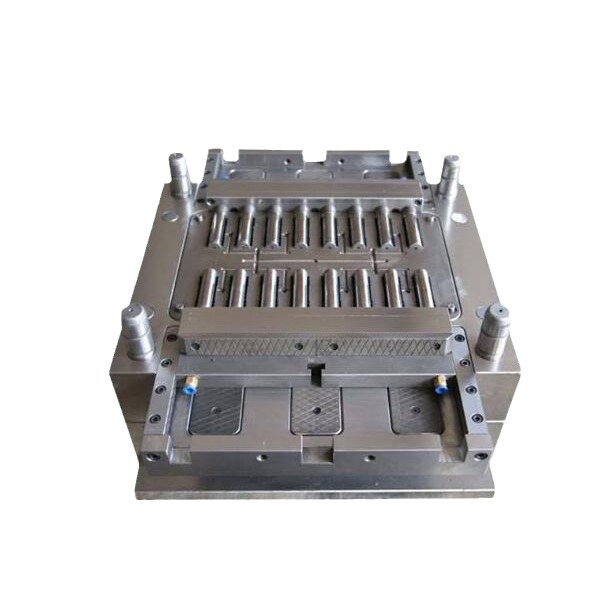
Large orders: High-volume production demands high-speed machines, multi-cavity molds, and the capacity to run multiple shifts. A mold with 16 or 32 cavities produces parts 16 or 32 times faster than a single-cavity mold. The right company has both the equipment and the production planning to scale up.
Timely Delivery Records
A great molding company with a late delivery is no help to you. Delivery performance matters as much as part quality.
Look for a supplier with a proven on-time delivery rate. Industry leaders maintain rates above 95% , with top performers hitting 98–99% .
Real-world example: A major appliance manufacturer needed an urgent order for a new product launch. The original lead time was 20 days. Their molding partner—through efficient scheduling and strong supply chain coordination—delivered in 15 days. That five-day buffer saved the customer from delaying their launch.
When evaluating a potential partner, ask for delivery data. A company that tracks and shares its performance is one that takes reliability seriously.
What Role Does Experience Play?
Experience isn’t just about years in business. It’s about the range of challenges a company has solved.
Handling Complex Projects
Every new product has unknowns. An experienced molder has seen them before.
- Material challenges: Glass-filled nylons wear screws. PVC degrades with too much heat. An experienced partner knows how to process difficult materials.
- Geometric complexity: Deep ribs, thin walls, undercuts—these require specialized mold designs and process controls.
- Tolerance demands: Medical and aerospace parts need tolerances of ±0.02mm or tighter. Experience translates into the ability to hit those specs consistently.
Troubleshooting Before Problems Occur
The best molders don’t just react to problems—they prevent them. Mold flow analysis simulates how plastic fills the cavity, identifying potential issues before steel is cut. Design for manufacturability (DFM) reviews catch design flaws that would cause defects or drive up cost.
Real-world example: A Yigu Technology client submitted a design with sharp corners that would have created weld lines and weak points. Our DFM review flagged the issue. We suggested radiused corners instead. The part passed structural testing on the first run—saving weeks of rework.
Why Does Customer Service Matter?
Technical capability alone doesn’t make a great partner. How a company communicates matters just as much.
Responsiveness and Transparency
When problems arise—and they will—you need a partner who responds quickly and honestly.
- Do they answer calls and emails within hours, not days?
- Do they provide clear timelines and stick to them?
- Do they share bad news early, giving you time to adjust?
A partner who hides problems until the last minute leaves you scrambling. A partner who communicates openly gives you options.
One-Stop Solutions
Some companies only mold parts. Others offer end-to-end service: design consultation, material selection, mold making, production, and post-processing.
A one-stop partner simplifies your supply chain. You deal with one team, one point of contact, one set of expectations. This reduces administrative overhead and eliminates finger-pointing when issues arise.
How Does Yigu Technology Approach This?
As a custom supplier of non-standard plastic and metal products, we see our role as more than just a manufacturer. We are a strategic partner to our clients.
Experience matters: We’ve worked across industries—medical, automotive, electronics, industrial equipment. Each project adds to our knowledge base. When a new challenge appears, we’ve often solved something similar before.
Technology enables quality: Our facilities include modern injection molding machines with closed-loop controls, CNC machining centers for precision mold-making, and automated inspection systems. This equipment isn’t just for show—it’s how we deliver consistent quality at scale.
Service builds trust: From DFM reviews to production planning to post-shipment support, we stay engaged. We’ve helped clients redesign parts to reduce cycle times, suggested alternative materials that cut costs without compromising performance, and adjusted production schedules to accommodate changing market demands.
One client summed it up: “You’re not just our supplier. You’re part of our development team.”
Conclusion
Choosing a plastic injection molding company is a strategic decision—not just a procurement task. The right partner delivers:
- Quality through advanced equipment and rigorous control systems
- Cost efficiency via material optimization and lean production
- Scalability to handle both small prototypes and large production runs
- Reliability with proven on-time delivery
- Experience that prevents problems before they occur
- Service that makes collaboration smooth and productive
The wrong partner leads to delays, defects, and damaged customer relationships. The right partner becomes a competitive advantage.
Take the time to evaluate potential partners. Look beyond the price quote. Visit facilities, ask about quality systems, check delivery records, and talk to current clients. The effort you put into selecting your molding partner will pay back in every production run.
FAQ
How to assess the quality of a plastic injection molding company?
Start with equipment. Modern machines with precise temperature and pressure control indicate a commitment to quality. Next, examine their quality control system. A good company will have raw material testing, in-process monitoring, and final inspections that include dimensional checks with CMMs, visual inspections, and functional testing. Finally, look for certifications like ISO 9001, which demonstrates an established quality management system. Ask for delivery records and client references—reliable companies are happy to share them.
What are the common cost-saving measures in plastic injection molding?
Material optimization is the biggest opportunity. Selecting the right resin for actual requirements prevents over-specifying and wasting money. Recycling production waste can cut raw material costs by 10–20%. Lean production strategies target waste reduction—eliminating overproduction, waiting time, excess inventory, and defects. A company that implements just-in-time production and preventive maintenance passes those savings to you through lower per-part costs and more predictable pricing.
How can I ensure on-time delivery from a plastic injection molding company?
Start with clear communication. Define your delivery schedule and requirements in writing. Include delivery time clauses in your contract, with agreed-upon penalties for late shipments. Choose a company with a demonstrated track record—ask for their on-time delivery percentage over the past 12–24 months. Finally, consider their production capacity. A company with multiple machines and the ability to run backup shifts has more flexibility to recover from unexpected issues without missing your deadline.
What certifications should I look for in an injection molding partner?
ISO 9001 is the baseline—it indicates a company has documented quality processes. For medical applications, ISO 13485 is essential. For automotive, IATF 16949 (formerly ISO/TS 16949) is the industry standard. These certifications aren’t just paperwork; they require regular audits and demonstrate a commitment to consistent quality. Beyond certifications, look for specific capabilities like in-process monitoring, automated inspection, and mold flow analysis—these tools deliver real quality improvements.
How much should I expect to pay for mold tooling?
Mold costs vary widely based on complexity, size, and material. A simple aluminum mold for low-volume production may cost (5,000–)15,000. A complex steel mold for high-volume automotive production can exceed (50,000–)100,000. When evaluating quotes, focus on total cost of ownership, not just mold price. A higher-quality mold may cost more upfront but produce parts longer with fewer defects, delivering lower per-part cost over the life of the project.
Contact Yigu Technology for Custom Manufacturing
Ready to bring your product to life? At Yigu Technology, we combine decades of injection molding experience with a commitment to quality, reliability, and customer service. We serve clients across medical, automotive, electronics, and industrial sectors—providing custom solutions from design through production.
Whether you need a prototype run or high-volume manufacturing, we have the equipment, expertise, and processes to deliver. Contact us today to discuss your project and see how a true manufacturing partner can make the difference.