Introduction
In an industry where tolerances are measured in microns and failure is not an option, one company has consistently set the standard. Precision Components Ltd has spent decades building a reputation for delivering high-precision parts across aerospace, automotive, medical, and electronics sectors. But reputation alone does not sustain leadership. The company has redefined engineering manufacturing through three core pillars: uncompromising quality control, advanced technological adoption, and a customer-centric approach that treats every project as a partnership. This guide explores how Precision Components Ltd achieves these standards and what manufacturers can learn from their methods.
How Does Precision Components Ensure Quality?
Adherence to ISO 9001:2015
Quality at Precision Components Ltd begins with a framework. The company operates under ISO 9001:2015, the global standard for quality management systems. This certification covers every aspect of operations—from design and production to delivery and customer feedback.
How ISO 9001:2015 drives quality:
- Risk assessment: During design, the company identifies potential failure points that could affect functionality, durability, or safety. Addressing these risks early prevents costly rework.
- Process documentation: Every production process is documented, creating traceability and enabling consistent replication.
- Continuous improvement: Regular audits and performance reviews identify opportunities to refine processes.
Real-world impact: A customer requiring aerospace components with 10-year service life received parts that exceeded fatigue testing requirements by 25%—directly attributable to ISO-driven design review processes.
Multi-Stage Quality Inspection
Quality is not a single checkpoint at Precision Components Ltd. It is a multi-stage process that begins with raw materials and continues through final shipment.
Raw material inspection:
Before any material enters production, it undergoes rigorous testing:
| Material Type | Tests Performed | Equipment Used |
|---|---|---|
| Metals | Chemical composition, hardness, tensile strength | Spectroscopic analyzers, hardness testers, tensile test machines |
| Plastics | Melt flow index, moisture content, dimensional stability | Melt flow testers, moisture analyzers |
For aluminum alloys, the company verifies that silicon, copper, and magnesium percentages match specifications. Any deviation—even within supplier tolerances—can affect machinability and final part properties. Only materials meeting strict internal standards proceed to production.
In-process inspection:
During CNC machining, components are inspected at critical stages:
- Coordinate measuring machines (CMMs): Measure dimensions with accuracy to ±0.001 mm after each major operation
- Surface finish checks: Profilometers verify roughness requirements (often Ra 0.4–0.8 μm for critical surfaces)
- Real-time monitoring: Cutting parameters are tracked to detect variations before they affect quality
Any deviation triggers immediate corrective action—adjusting machining parameters or, if necessary, removing the part from production.
Final product inspection:
Completed components undergo:
- Functional testing: Simulated real-world conditions (temperature, pressure, speed) for application-specific performance
- Visual inspection: Cosmetic checks for surface defects that could affect appearance or marketability
- Dimensional verification: 100% inspection of critical features on CMMs
Only parts that pass all tests are shipped. For medical and aerospace customers, certified inspection reports accompany every shipment.
What Technologies Drive Precision?
Advanced CNC Machining Capabilities
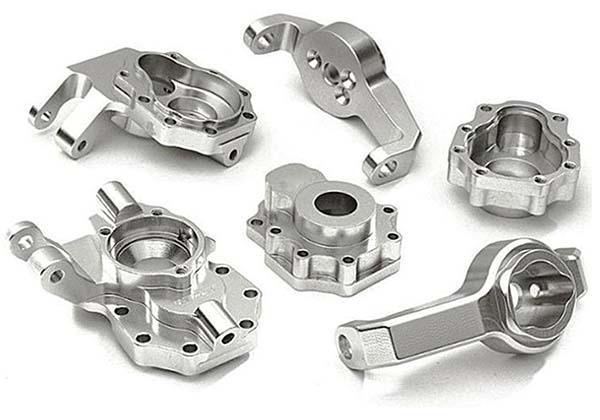
Precision Components Ltd maintains a fleet of high-precision CNC machines capable of achieving tolerances that standard equipment cannot match.
Key equipment:
- 5-axis machining centers: Complete complex geometries in single setups, eliminating alignment errors
- Swiss-type turning centers: Produce small, intricate parts with ±0.005 mm accuracy
- EDM (Electrical Discharge Machining): Creates sharp internal corners and features in hardened materials
- High-speed machining centers: Spindle speeds up to 20,000 RPM for efficient material removal
Positioning accuracy: The company’s CNC machines achieve positioning accuracies of ±0.0001 mm—critical for components where microns determine success or failure.
CAD/CAM Integration
Design and manufacturing are seamlessly connected through CAD (Computer-Aided Design) and CAM (Computer-Aided Manufacturing) software.
Workflow:
- Engineers create detailed 3D models in CAD
- CAM software generates optimized toolpaths
- Simulation verifies collision-free machining
- Programs are transferred directly to CNC machines
This integration reduces programming errors by up to 70% and shortens design-to-production cycles by 30–40% .
Metrology and Inspection Equipment
Quality verification relies on precision measurement tools:
- CMMs: Measure complex geometries with ±0.0005 mm accuracy
- Optical comparators: Profile verification for 2D features
- Surface profilometers: Roughness measurement down to 0.001 μm Ra
- Vision systems: Automated inspection of high-volume parts
How Does Customer-Centric Approach Work?
Customization for Special Projects
Standard catalog parts are not the focus. Precision Components Ltd specializes in custom solutions for unique applications.
Customization process:
- Deep communication: Engineers discuss functional, dimensional, and material requirements with customers
- Design development: CAD models and manufacturing plans are created collaboratively
- Prototyping: First articles are produced and validated
- Production: Optimized processes deliver consistent quality at scale
Case example – Medical device component:
A medical device manufacturer needed a custom implant component with:
- Biocompatible material (titanium alloy)
- Tolerances of ±0.005 mm on mating surfaces
- Surface finish Ra 0.2 μm for wear resistance
Precision Components Ltd:
- Recommended an optimized titanium grade for machinability
- Developed a 5-axis machining strategy to achieve tolerances
- Implemented specialized polishing for surface finish
- Delivered components that passed all biocompatibility tests
The result: The customer launched a new medical device on schedule with components that exceeded performance requirements.
Responsive Communication
The company maintains open communication channels throughout every project. Customers receive:
- Regular production updates
- Real-time quality data upon request
- Engineering support for design optimization
- Post-delivery follow-up
What Industries Does Precision Components Serve?
Aerospace
Components for aircraft engines, landing gear, and structural assemblies. Requirements include:
- Tolerances to ±0.005 mm
- Materials: nickel-based superalloys, titanium, 15-5PH stainless
- Certifications: AS9100, NADCAP heat treatment
Example: Turbine blade cooling holes machined to ±0.01 mm positions—critical for engine efficiency and fuel consumption.
Automotive
Engine components, transmission parts, and performance applications. Requirements include:
- Tolerances to ±0.01 mm
- Materials: high-strength steels, aluminum alloys
- High-volume production capability
Example: Transmission gear shafts with helical teeth machined to AGMA Class 12 quality—smooth shifting and reduced noise.
Medical Devices
Implants, surgical instruments, and diagnostic equipment components. Requirements include:
- Tolerances to ±0.005 mm
- Materials: titanium, stainless steel, biocompatible plastics
- Certifications: ISO 13485, cleanroom manufacturing
Example: Spinal implant components with porous surfaces for bone integration—machined to match patient-specific anatomy.
Electronics
Enclosures, connectors, and heat sinks for consumer and industrial electronics. Requirements include:
- Tolerances to ±0.01 mm
- Materials: aluminum, copper, engineered plastics
- Surface finishes for aesthetic and functional requirements
A Real-World Success Story
A customer in the semiconductor equipment industry needed a complex vacuum chamber component. Challenges included:
- Tight tolerances across multiple features (±0.005 mm)
- Vacuum integrity requirements (no leaks at 10⁻⁶ Torr)
- Complex internal passages for cooling
- Delivery in 8 weeks
Precision Components Ltd approach:
- Design collaboration: Engineers suggested modifications to improve manufacturability without affecting function
- Multi-axis machining: 5-axis machining completed all features in two setups
- In-process inspection: CMM checks at each stage ensured tolerances were maintained
- Leak testing: Helium leak testing verified vacuum integrity
- Documentation: Full inspection reports provided with shipment
Results:
- Delivered in 7 weeks (1 week ahead of schedule)
- 100% passed leak testing
- Customer reported zero installation issues
- Follow-up order placed within 30 days
What Can Other Manufacturers Learn?
Invest in Quality Systems
ISO 9001:2015 is not just a certification—it is a framework for consistency. Documented processes, regular audits, and continuous improvement create repeatable results.
Embrace Advanced Technology
Precision manufacturing requires precision equipment. 5-axis machines, Swiss-type lathes, and advanced metrology tools enable tolerances that standard equipment cannot achieve.
Prioritize Customer Communication
Customization requires understanding. Deep communication about requirements, capabilities, and constraints prevents misunderstandings and ensures successful outcomes.
Build a Skilled Workforce
Technology alone is not enough. Skilled engineers, programmers, and machinists who understand materials, processes, and quality systems transform capability into reliable results.
Conclusion
Precision Components Ltd has redefined engineering manufacturing by making quality, technology, and customer focus inseparable. Its ISO 9001:2015-certified quality system ensures consistency from raw material to final inspection. Its advanced CNC equipment and metrology tools achieve tolerances that standard manufacturers cannot match. And its customer-centric approach treats every project as a partnership, delivering custom solutions that meet specific requirements. For manufacturers seeking to raise their own standards, Precision Components Ltd provides a clear model: invest in quality systems, embrace advanced technology, communicate deeply with customers, and build a skilled workforce that can execute at the highest level.
FAQs
What types of precision components does Precision Components Ltd mainly produce?
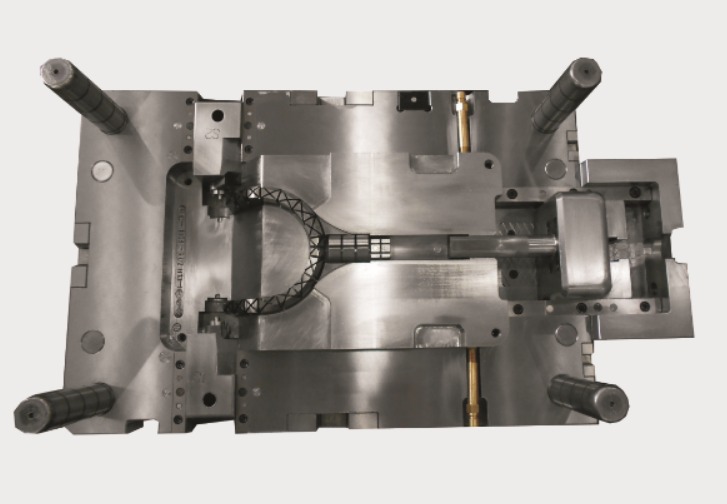
Precision Components Ltd produces a wide range of components across multiple industries. In aerospace, it manufactures turbine engine blades, structural fittings, and landing gear components. In medical, it produces surgical instruments, orthopedic implants, and diagnostic equipment parts. In automotive, it delivers transmission gears, engine components, and high-performance racing parts. The company also specializes in precision mold components—mold cores and cavities with dimensional accuracies reaching ±0.001 mm—and automation equipment components such as linear guides and servo motor shafts.
How does Precision Components Ltd ensure the precision of its products?
Precision is ensured through multiple layers. First, the company uses high-precision CNC machines with positioning accuracy up to ±0.0001 mm. Second, it maintains a multi-stage quality inspection process—raw material testing, in-process CMM checks, and final functional testing. Third, a team of experienced engineers optimizes machining parameters and solves complex technical problems. This combination of equipment, process, and expertise delivers consistent precision across production runs.
Can Precision Components Ltd provide customized solutions for special projects?
Yes. Customization is central to the company’s approach. The process begins with in-depth communication to understand functional, dimensional, and material requirements. Engineers then design tailored solutions using advanced CAD/CAM software. For a recent medical device project, the company developed a custom titanium component with unique biocompatible requirements and ±0.005 mm tolerances—successfully enabling the customer’s new product launch.
What industries does Precision Components Ltd serve?
The company serves aerospace, automotive, medical, and electronics industries. In aerospace, components meet AS9100 standards. In medical, operations comply with ISO 13485 and cleanroom requirements. In automotive and electronics, the company delivers high-volume precision components for demanding applications.
What quality certifications does Precision Components Ltd hold?
Precision Components Ltd is certified to ISO 9001:2015 for quality management. For aerospace applications, it maintains AS9100 certification. For medical devices, it complies with ISO 13485. Heat treatment processes are NADCAP-certified where required. These certifications ensure that every component meets the strictest industry standards.
Contact Yigu Technology for Custom Manufacturing
At Yigu Technology, we share Precision Components Ltd’s commitment to quality, precision, and customer partnership. As a custom manufacturer of non-standard plastic and metal components, we combine advanced CNC machining capabilities with rigorous quality control systems. Our engineering team works closely with customers to optimize designs for manufacturability and deliver components that meet tight tolerances—whether for aerospace, medical, automotive, or industrial applications. We believe that precision manufacturing is not just about machines; it is about understanding requirements, applying expertise, and delivering results. Contact us to discuss your custom manufacturing needs.