Introduction
In modern manufacturing, precision turning components are the unsung heroes that enable the seamless operation of critical industries. From aerospace, where a microscopic deviation can lead to catastrophic consequences, to medical devices, where patient safety depends on micron-level accuracy, precision turning stands as the cornerstone of quality and reliability.
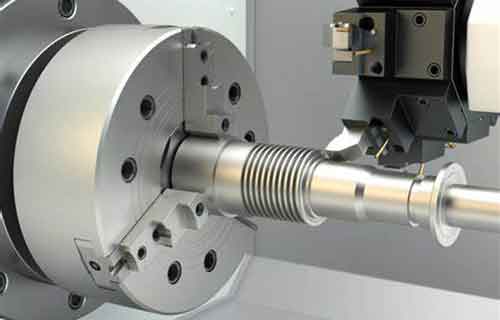
Precision turning is a subtractive manufacturing process that uses a lathe to remove material from a rotating workpiece. The cutting tool, stationary in most operations, is fed into the workpiece at a precisely controlled rate, angle, and depth. The result is a component with exceptional accuracy—tolerances as tight as ±0.0001 inches (±2.54 microns) —far beyond the capabilities of traditional machining.
As industries demand higher performance, greater complexity, and tighter tolerances, the masters of precision turning continue to push boundaries. This guide explores the technical foundations, material expertise, process capabilities, and quality systems that distinguish leading precision turning manufacturers. We will examine who these masters are, what sets them apart, and how they enable innovation across critical sectors.
What Technical Foundations Enable Precision Turning?
CNC Turning: The Digital Backbone
CNC turning is the foundation of modern precision manufacturing. Computer-controlled machines execute programmed movements with remarkable accuracy, achieving tolerances as tight as ±0.005 mm. This level of precision is essential for applications where even slight deviations have significant consequences.
Modern CNC turning machines feature high-speed spindles capable of reaching 50,000 RPM. This rotational speed enables faster material removal rates while maintaining precision. Diamond-tipped tools further enhance capability. Diamond’s extreme hardness creates surface finishes below Ra 0.1 μm—essential for optical components where light scattering must be minimized.
Swiss-Type Machining: Excellence for Slender Parts
Swiss-type machining (also called Swiss-screw machining) excels at producing long, slender components. The method uses a guide bushing that supports the workpiece close to the cutting tool, reducing vibration and improving concentricity. Concentricity errors can be held below 5 μm.
A key advantage is the ability to produce complex geometries in a single setup. Multiple tools engage simultaneously, creating grooves, threads, and holes along the component length. For medical implants, Swiss-type machining produces intricate internal and external features essential for proper function.
Multi-Axis Machining: Complexity in One Setup
Multi-axis machining, particularly 5-axis, has revolutionized precision turning. The workpiece rotates and tilts while the cutting tool moves in multiple axes. This enables machining of complex geometries—helical grooves, internal threads, undercuts—that would be impossible or require multiple setups with traditional methods.
In aerospace, 5-axis machining produces turbine blades with complex airfoil shapes in a single setup. Eliminating multiple operations reduces errors from re-fixturing, improving accuracy, quality, and efficiency.
| Process | Typical Tolerance | Ideal For | Key Features |
|---|---|---|---|
| CNC Turning | ±0.005 mm | General precision components | High-speed spindles (50,000 RPM), diamond-tipped tools |
| Swiss-Type Machining | Concentricity <5 μm | Long, slender components | Guide bushing reduces vibration, multi-tool operation |
| Multi-Axis (5-axis) | Complex geometries | Components with intricate shapes | Simultaneous 5-axis movement of workpiece and tool |
How Does Material Selection Impact Precision Turning?
Material choice is as critical as the machining process itself. Different materials offer unique property combinations, and selecting the right material ensures performance, durability, and functionality.
Titanium Alloys: Strength Meets Light Weight
Titanium alloys are highly valued in aerospace and medical applications for their exceptional strength-to-weight ratio. They provide high strength while remaining relatively lightweight—ideal for applications where weight reduction is crucial without sacrificing structural integrity.
In aerospace, titanium alloys in engine components reduce overall weight, improving fuel efficiency and performance. In medical applications, titanium’s biocompatibility ensures implants are well-tolerated by the human body. Corrosion resistance ensures long-term stability. Titanium alloy hip implants can last decades, providing reliable support.
Stainless Steel 316L: Biocompatible and Corrosion-Resistant
Stainless Steel 316L is a preferred choice for applications requiring biocompatibility and corrosion resistance, such as surgical tools. The “L” indicates low carbon content, which reduces carbide precipitation risk and improves corrosion resistance.
Surgical tools made from 316L maintain sharpness and integrity through repeated sterilization and exposure to body fluids. Biocompatibility ensures no harmful substances leach during procedures, protecting patient health.
Inconel 718: Heat Resistance for Extreme Conditions
Inconel 718 is a nickel-based superalloy with excellent heat resistance, suitable for components enduring high temperatures. Turbine components in power generation and aerospace engines operate at temperatures up to 800°C. Inconel 718 maintains mechanical properties under these extreme conditions.
The alloy’s high-temperature strength, corrosion resistance, and fatigue resistance make it reliable for demanding applications. Turbine blades made from Inconel 718 withstand high-speed rotation and extreme heat within gas turbine engines, ensuring efficient power generation and reliable operation.
| Material | Key Property | Application Example |
|---|---|---|
| Titanium Alloys | High strength-to-weight ratio, biocompatible | Aerospace engine components, medical implants |
| Stainless Steel 316L | Biocompatible, corrosion-resistant | Surgical tools |
| Inconel 718 | Heat-resistant (up to 800°C) | Turbine components in power generation and aerospace |
How Does Precision Turning Compare to Traditional Machining?
The choice between precision turning and traditional machining significantly impacts quality, cost, and efficiency. A detailed comparison reveals distinct advantages.
Tolerance and Accuracy
Precision turning consistently achieves tolerances as tight as ±0.005 mm. Traditional machining typically achieves ±0.05 mm—an order of magnitude difference.
This accuracy is essential for aerospace and medical applications. In aerospace engine components, a small deviation can cause vibrations, reduce fuel efficiency, or lead to failure. In medical implants, precise tolerances ensure proper fit and minimize rejection risk.
Surface Finish
Precision turning achieves surface roughness (Ra) of 0.2–0.8 μm. Traditional machining typically achieves 1.6–6.3 μm.
For automotive engine cylinders and pistons, smoother surfaces reduce friction and improve fuel efficiency. Precision-turned surfaces minimize energy wasted to friction, improving performance and extending lifespan.
Material Waste
Precision turning results in 15–20% material waste. Traditional machining can generate 30–50% waste.
For expensive materials like titanium alloys or Inconel, lower waste translates to significant cost savings—especially critical for small to medium enterprises with limited raw material budgets.
Cycle Time for Complex Parts
Precision turning completes complex parts in 2–4 hours. Traditional machining may take 8–12 hours.
Advanced technologies—multi-axis machining, high-speed spindles—enable faster, more efficient operations. In electronics, where demand for small, complex components is high, shorter cycle times allow manufacturers to meet tight schedules and respond quickly to market demands.
| Parameter | Precision Turning | Conventional Machining |
|---|---|---|
| Tolerance | ±0.005 mm | ±0.05 mm |
| Surface Finish (Ra) | 0.2–0.8 μm | 1.6–6.3 μm |
| Material Waste | 15–20% | 30–50% |
| Cycle Time (Complex Parts) | 2–4 hours | 8–12 hours |
What Quality Systems Define Precision Turning Masters?
Measurement and Inspection Capability
Precision turning masters invest in advanced metrology. Coordinate Measuring Machines (CMMs) verify critical dimensions with accuracy to ±0.002 mm. For components requiring tolerances of ±0.005 mm, this level of measurement capability is essential.
Surface profilometers measure roughness to verify finishes meet specifications. For sealing surfaces in fluid systems or bearing surfaces in rotating assemblies, confirming Ra values below specified thresholds prevents performance issues.
Process Control and Documentation
Statistical Process Control (SPC) tracks dimensional variations across production runs. Control charts identify trends before parts go out of specification. Masters use SPC not as inspection after the fact, but as process control that prevents non-conforming parts from being made.
Full traceability documents material lot numbers, machining parameters, inspection results, and operator identification for each component. In aerospace and medical applications, this traceability is required for regulatory compliance.
Certifications and Standards
ISO 9001 is the baseline quality management certification. AS9100 adds aerospace-specific requirements for safety, traceability, and risk management. ISO 13485 indicates medical-specific quality systems.
Masters in precision turning hold relevant certifications and undergo regular audits to maintain them. These certifications are not just badges—they represent documented processes, continuous improvement, and commitment to quality.
What Applications Demand Precision Turning Excellence?
Aerospace
Aerospace demands the highest precision for critical components. Turbine blades require complex airfoil shapes with surface finishes below Ra 0.4 μm and tolerances measured in thousandths of an inch. Engine shafts must maintain concentricity to prevent vibration at high rotational speeds. Landing gear components require material integrity and dimensional accuracy to withstand extreme loads during takeoff and landing.
Precision turning masters serving aerospace maintain AS9100 certification, provide full traceability, and invest in 5-axis capabilities for complex geometries.
Medical Devices
Medical applications require precision, biocompatibility, and regulatory compliance. Orthopedic implants—hip stems, knee components—must match patient anatomy exactly. Surgical instruments require sharp edges and precise geometries. Dental implants demand micron-level accuracy for proper osseointegration.
Masters serving medical markets maintain ISO 13485 certification, control processes for biocompatible materials like titanium and PEEK, and provide documentation for regulatory submissions.
Semiconductor
Semiconductor manufacturing demands components with exceptional purity and precision. Wafer handling tools must not introduce contaminants that affect chip yields. Chamber components require precise geometries to maintain vacuum integrity.
Precision turning masters serving semiconductor markets maintain cleanroom capabilities, use materials with low outgassing, and achieve surface finishes that minimize particle generation.
Automotive
Automotive applications balance precision with cost-effectiveness. Fuel injection components require tight tolerances to control fuel delivery precisely. Transmission parts need consistent dimensions for smooth operation. Turbocharger components demand heat-resistant materials and precise geometries.
Masters serving automotive markets maintain IATF 16949 certification and balance high-volume production capabilities with precision requirements.
What Distinguishes Masters from Competitors?
Technical Expertise Across Materials
Masters understand material behavior deeply. They know how cutting parameters must change between aluminum, stainless steel, titanium, and Inconel. They select appropriate tool coatings—TiN, TiAlN, AlTiN—based on material and operation. They adjust feed rates, speeds, and depths of cut to balance productivity against tool life and surface quality.
Investment in Advanced Equipment
Masters invest in the latest technology. High-speed spindles, thermal compensation systems, and automated tool changers are standard. They replace equipment before it becomes obsolete, maintaining capability to meet tightening tolerances.
Skilled Workforce
Masters attract and retain skilled programmers and machinists. They invest in training, knowing that even the most advanced equipment requires skilled operators to realize its potential. They foster cultures where machinists take ownership of quality and continuously improve processes.
Customer Partnership
Masters view each project as the start of a long-term relationship. They engage early in design, recommending modifications that improve manufacturability without compromising function. They communicate proactively about schedules, challenges, and opportunities. They deliver not just parts, but confidence.
Conclusion
Precision turning component manufacturing is a discipline that combines advanced technology, deep material knowledge, and rigorous quality systems. The masters of this field achieve tolerances of ±0.005 mm, surface finishes below Ra 0.2 μm, and cycle times measured in hours rather than shifts.
They invest in multi-axis CNC turning, Swiss-type machining, and high-speed spindles. They select materials—titanium, stainless steel, Inconel—based on application requirements. They implement quality systems that measure, document, and control every process variable. And they serve industries where precision is not just a specification but a safety requirement.
For manufacturers seeking partners in precision turning, the masters distinguish themselves through technical capability, quality commitment, and a partnership approach. They enable innovation by producing components that meet the most demanding requirements—consistently, reliably, and cost-effectively.
FAQ
Which industries have the highest demand for precision turning components?
Aerospace, medical, and semiconductor industries have the highest demand. Aerospace requires turbine blades and engine shafts with tight tolerances for flight safety and efficiency. Medical devices—implants, surgical instruments—require precision for patient safety and proper function. Semiconductor manufacturing depends on precision-turned wafer carriers and chamber components with sub-micron accuracy.
How does precision turning compare to 3D printing for manufacturing components?
3D printing offers design freedom for complex geometries by building parts layer by layer. Precision turning provides superior surface finish—Ra 0.2–0.8 μm compared to rougher 3D-printed surfaces. Precision turning also delivers better material properties for high-stress applications, as subtractive processes avoid the layer-by-layer structure and potential porosity issues associated with 3D printing.
What tolerances can precision turning achieve?
Precision turning consistently achieves tolerances of ±0.005 mm (±0.0002 inches) . In specialized applications with advanced equipment and optimal conditions, tolerances as tight as ±0.0025 mm (±0.0001 inches) are possible.
What certifications should a precision turning manufacturer hold?
ISO 9001 is the baseline quality certification. For aerospace, AS9100 is essential. For medical devices, ISO 13485 indicates medical-specific quality systems. For automotive, IATF 16949 is the industry standard. These certifications demonstrate documented processes, continuous improvement, and commitment to quality.
What technological advancements are shaping precision turning?
AI and IoT integration are shaping the future. AI optimizes machining parameters in real time, adjusting for tool wear and material variations to improve precision and reduce waste. IoT-enabled sensors monitor machining processes, providing data for predictive maintenance and quality control. Sustainable materials and processes are also becoming increasingly important.
Contact Yigu Technology for Custom Manufacturing
Need precision-turned components for critical applications? Yigu Technology combines advanced CNC turning capabilities with deep material expertise to deliver components that meet the tightest tolerances. Our engineers work with you from design through production to ensure your parts perform as intended. Contact us today to discuss your requirements.