Introduction
Metal 3D printing has moved from research labs to real-world production floors. Aerospace companies use it for turbine blades. Medical device manufacturers rely on it for custom implants. Automotive engineers prototype complex parts in days instead of months. But finding the right service provider nearby can feel overwhelming. How do you separate genuine experts from those just adding "3D printing" to their marketing materials? This guide walks you through everything you need to know—from understanding core technologies to evaluating local providers—so you can make confident decisions and get quality metal parts on time.
What Makes Metal 3D Printing Different?
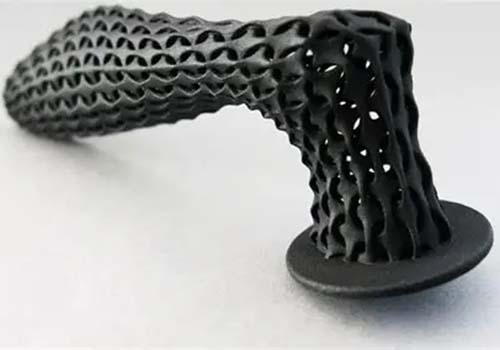
Metal 3D printing, also called additive manufacturing, builds parts layer by layer from metal powder or wire. Unlike traditional machining that cuts away material, this process adds material only where needed. The result? Complex geometries, less waste, and design freedom impossible with conventional methods.
Common Metal 3D Printing Processes
Different technologies serve different needs. Here is a quick comparison:
| Technology | How It Works | Common Materials | Precision | Best For |
|---|---|---|---|---|
| Selective Laser Melting (SLM) | Laser melts metal powder layer by layer in a controlled chamber | Stainless steel, titanium, aluminum | ±50–100μm | High-precision components like aerospace parts and medical implants |
| Electron Beam Melting (EBM) | Electron beam melts powder in a vacuum environment | Titanium alloys, cobalt-chrome | ±100–200μm | Large aerospace parts, orthopedic implants |
| Direct Energy Deposition (DED) | Laser or electron beam melts powder or wire as it deposits onto a substrate | Inconel, copper, tool steel | ±200–500μm | Repairing worn parts, adding features to existing components |
| Binder Jetting | Binder bonds powder particles, then sintering densifies the part | Stainless steel, bronze, iron | ±200–300μm | Low-cost prototypes, medium-volume production |
Selective Laser Melting (SLM) Explained
SLM is the most common metal 3D printing technology for high-precision parts. A high-power laser scans across a thin layer of metal powder—typically 20–100μm thick. The laser melts and fuses particles exactly where the part should be solid. The build platform lowers by one layer thickness, a new powder layer spreads, and the process repeats.
The entire operation happens inside a chamber filled with inert gas like argon or nitrogen. This prevents oxidation and ensures clean, strong parts.
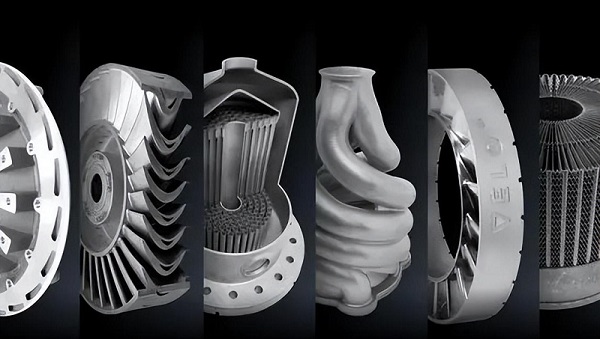
Real-world example: A turbine blade for a jet engine needs internal cooling channels to survive extreme temperatures. Traditional machining cannot create these complex internal passages. SLM prints them directly, improving engine efficiency and durability.
Direct Energy Deposition (DED) Explained
DED takes a different approach. Instead of working in a powder bed, a nozzle delivers metal powder or wire to the exact spot where an energy beam—laser or electron—melts it. Think of it as a welding torch controlled with CNC precision.
This makes DED ideal for:
- Repairing expensive components: Add material to worn surfaces, then machine back to spec
- Adding features: Print flanges or bosses onto existing cast or forged parts
- Large parts: Build volumes can reach meters in size
Real-world example: A mining company had a large gear with worn teeth. Replacing it cost $50,000 and took six months. DED restored the teeth in two weeks for $8,000. The repaired gear performed like new.
Binder Jetting Explained
Binder jetting prints parts by selectively depositing liquid binder onto metal powder layers. The "green" part comes out of the printer fragile but accurately shaped. It then goes into a furnace where high heat sinters the metal particles together.
This two-step process offers:
- High speed: Print heads deposit binder across entire layers quickly
- No supports: Unbound powder supports overhangs naturally
- Cost efficiency: Lower equipment cost and faster build times
Real-world example: A consumer electronics company needed 5,000 small stainless steel brackets. Binder jetting produced them at 60% lower cost than machining and 40% faster than SLM.
What Technical Capabilities Matter Most?
Build Volume
Build volume determines maximum part size. Industrial printers like InssTek's MX-Fab3 offer build volumes up to 800 x 1000 x 700 mm. This handles large aerospace components like wing spars or engine casings.
Desktop systems typically max out around 200 x 200 x 200 mm—fine for prototypes and small production parts.
Ask yourself: What size parts do you need now? What about future projects? Choosing a provider with larger capacity gives you room to grow.
Multi-Material Support
Some technologies, especially DED, can print multiple materials in a single part. This enables:
- Gradient structures: Gradually transition from one alloy to another
- Cladding: Wear-resistant surface on tough core material
- Hybrid parts: Combine properties of different metals
Real-world example: A rocket nozzle needs high-temperature resistance on the inside but lighter weight on the outside. DED printed it with Inconel 625 inner layers and aluminum-bronze outer layers. The result? A nozzle that handles exhaust heat while saving critical weight.
Post-Processing Expertise
Printed parts rarely go straight to use. Post-processing turns raw prints into finished products. Look for providers offering:
| Service | Purpose | Example Application |
|---|---|---|
| Heat treatment | Relieves stress, improves mechanical properties | Medical implants need specific strength and ductility |
| CNC machining | Achieves tight tolerances and smooth surfaces | Critical mating surfaces on engine components |
| Surface finishing | Improves appearance and function | Polished surfaces for aesthetic or hygienic requirements |
| Hot isostatic pressing (HIP) | Eliminates internal porosity | Aerospace parts requiring maximum reliability |
| Inspection | Verifies quality | CT scanning for internal defect detection |
A provider with in-house post-processing saves you shipping parts elsewhere and managing multiple vendors.
How to Evaluate Local Metal 3D Printing Services?
Geographic Proximity vs. Global Networks
Local services offer:
- Faster delivery: Regional orders often arrive in 1–3 days
- Easier communication: Visit facilities, discuss projects face-to-face
- Lower shipping costs: No international freight or customs
Global networks provide:
- Specialized expertise: Companies like TheSteelPrinters have completed over 3,500 jobs across heavy industries
- Broader technology access: Multiple machine types under one roof
- Economies of scale: Potentially lower costs for large projects
The right choice depends on your priorities. Need quick iteration on a prototype? Go local. Require exotic materials or massive build volume? A global specialist might serve you better.
Using Online Platforms for Selection
Platforms like Xometry, 3D Hubs, and Treatstock let you filter providers by:
- Location: Find services near you
- Certifications: ISO 9001, AS9100, ISO 13485
- Materials: Specific alloys you need
- Technologies: SLM, DED, binder jetting
Upload your model and receive quotes from multiple providers. Compare not just price but also lead times, material options, and customer reviews.
Material Portfolio and Industry Compliance
Material range matters. Top providers offer 50+ metal alloys, including:
- Stainless steels: 316L, 17-4PH for general use
- Titanium alloys: Ti-6Al-4V for aerospace and medical
- Nickel superalloys: Inconel 718, 625 for high-temperature applications
- Tool steels: H13, Maraging steel for molds and dies
- Precious metals: Gold, silver, platinum for jewelry and dentistry
- Exotic alloys: CMSX-4 for turbine blades, C-103 niobium for space applications
Regulatory compliance is non-negotiable for regulated industries:
- Medical: FDA-approved materials, ISO 13485 quality systems
- Aerospace: NADCAP-certified processes, AS9100 certification
- Automotive: IATF 16949 for production parts
Ask potential providers about their certifications. Request documentation. Reputable companies gladly share their credentials.
What Quality Control Protocols Should You Expect?
Dimensional Accuracy
Printed parts must match design specifications. Good providers use:
- Laser scanning: Compares printed parts to CAD models
- Coordinate measuring machines (CMM): Verifies critical dimensions
- Accuracy targets: Typically ±0.1% of design specs or better
For medical implants, a hip stem must fit precisely. Any deviation could cause patient discomfort or implant failure. Rigorous dimensional inspection prevents these problems.
Mechanical Testing
Properties like strength and ductility matter for functional parts. Expect:
- Tensile testing: Verifies strength matches material specifications. For 316L stainless steel, expect around 850 MPa ultimate tensile strength.
- Hardness testing: Confirms proper heat treatment
- Impact testing: Measures toughness for critical applications
Test coupons printed alongside your parts undergo the same processing. Testing them verifies material properties without destroying your parts.
Non-Destructive Testing
Some parts require inspection without damage:
- CT scanning: Reveals internal defects, verifies internal geometry
- Ultrasonic testing: Detects subsurface flaws
- Dye penetrant inspection: Finds surface cracks
Aerospace and medical applications often mandate these inspections. Ask if your provider offers them or partners with qualified testing labs.
How Much Does Metal 3D Printing Cost?
Key Pricing Factors
Cost varies widely based on multiple factors. Understanding them helps you budget accurately:
| Cost Driver | Impact on Price | Example (100cm³ Stainless Steel Part) |
|---|---|---|
| Material Type | Exotic alloys cost 3–5x more than common ones | Titanium: $150 vs. Stainless steel: $50 |
| Geometric Complexity | Internal channels, thin walls increase material use 20–30% | Simple shape: $80 vs. Complex: $120 |
| Post-Processing | Heat treatment, machining add 50–100% to base cost | Raw: $50 vs. Finished: $100 |
| Quantity | Setup costs spread across multiple parts | 1 part: $500 vs. 10 parts: $200 each |
| Lead Time | Rush orders cost premium | Standard: base price vs. Rush: +50–100% |
Hidden Costs to Watch For
Some costs may not appear in initial quotes:
- Design optimization: Complex parts may need redesign for printability
- Support removal: Labor for removing and cleaning supports
- Inspection reports: Detailed documentation for regulated industries
- Minimum order quantities: Some providers charge setup fees even for single parts
Ask for itemized quotes that break down these components. Compare apples to apples when evaluating providers.
How Does Yigu Technology Help with Metal 3D Printing?
As a non-standard plastic and metal products custom supplier, Yigu Technology bridges the gap between your designs and quality metal parts. We don't just print—we partner with you throughout the process.
Our Approach
Technology matching: We evaluate your project and recommend the right process. Need high precision? SLM. Large part? DED. Production volume? Binder jetting. We match technology to requirements, not the other way around.
Design for additive manufacturing: Our engineers review your models and suggest improvements that:
- Reduce material usage
- Minimize supports
- Improve printability
- Enhance performance
Material guidance: With access to 50+ metal alloys, we help you select the right material for mechanical properties, corrosion resistance, and budget.
Quality assurance: Every part undergoes inspection appropriate to its application. Dimensional verification, mechanical testing, or full CT scanning—we tailor quality protocols to your needs.
Client Success Story
A robotics company needed lightweight titanium brackets with internal cooling channels. Traditional machining would require drilling and welding—time-consuming and leak-prone. We recommended SLM printing in Ti-6Al-4V. Our team optimized the design for printability, reducing material use by 30% while maintaining strength. Printed parts passed all pressure tests. Lead time: two weeks versus eight weeks for machined alternatives.
Another client required 200 stainless steel production parts. Binder jetting offered the best cost-value balance. We printed them in one batch, sintered to full density, and performed final CNC machining on critical surfaces. Cost per part came in 40% below machined equivalents.
Conclusion
Finding top-quality metal 3D printing services nearby requires balancing multiple factors: technology capabilities, material expertise, quality protocols, and cost. Start by understanding your project requirements. What precision do you need? What materials? What volumes?
Then evaluate providers against these criteria. Look for proven experience—companies like TheSteelPrinters with 1500+ optimized designs demonstrate real capability. Verify certifications for regulated industries. Request sample parts or case studies similar to your application.
Consider both local and global options. Local providers offer speed and communication advantages. Global specialists may bring deeper expertise and broader capabilities. The right choice depends on your specific needs.
Finally, remember that the cheapest quote rarely delivers the best value. Quality, reliability, and technical expertise matter more than minor price differences—especially for critical applications.
With careful evaluation, you will find a partner who transforms your designs into high-performance metal parts reliably and efficiently.
Frequently Asked Questions
Q1: What is the difference between SLM and DED in metal 3D printing?
SLM uses a laser to melt metal powder layer by layer in a powder bed. It achieves high precision (±50–100μm) and is ideal for complex, detailed parts. DED melts powder or wire as it deposits onto a substrate, offering lower precision (±200–500μm) but handling larger parts and repairs. Choose SLM for new, intricate components. Choose DED for adding features or repairing existing parts.
Q2: How can I reduce the cost of metal 3D printing?
Several strategies help:
- Use common materials like stainless steel instead of exotic alloys
- Simplify designs to reduce material usage and supports
- Combine multiple parts into one printed assembly
- Batch multiple parts in a single build
- Specify only necessary post-processing
Q3: Are there material limitations in metal 3D printing?
While many metals work, not all alloys suit every process. High-reflectivity materials like copper challenge laser-based systems. Reactive metals like titanium require controlled atmospheres. Some alloys lack available powder forms. In regulated industries, only certified materials qualify. Always verify material availability with your provider.
Q4: How strong are 3D printed metal parts compared to machined parts?
Properly processed 3D printed parts match or exceed wrought material properties. For example, 316L stainless steel printed with optimized parameters achieves 850 MPa tensile strength—equivalent to forged material. Heat treatment further improves properties. The key is process control and quality assurance.
Q5: What industries benefit most from metal 3D printing?
Aerospace, medical, automotive, and energy lead adoption. Aerospace uses it for lightweight, complex components. Medical relies on custom implants and surgical guides. Automotive prototypes parts and produces small production runs. Energy companies repair high-value components and optimize designs for performance.
Q6: How long does metal 3D printing take?
Print time depends on part size, complexity, and technology. Small SLM parts may print in hours. Large DED builds can take days. Add post-processing: heat treatment (hours), CNC machining (hours to days), inspection (hours). Total lead time ranges from days to weeks. Always ask your provider for realistic estimates.
Q7: Do I need to redesign parts for metal 3D printing?
Often yes. Designs optimized for machining or casting may not print efficiently. Features like internal channels, lattice structures, and organic shapes leverage additive's strengths. Your provider should offer design assistance or guidelines. Investing in design optimization pays off through better parts and lower costs.
Contact Yigu Technology for Custom Manufacturing
Ready to bring your metal parts to life with metal 3D printing? At Yigu Technology, we combine deep technical knowledge with practical manufacturing experience. Our team helps you select the right technology, optimize designs for printability, and deliver quality parts on schedule.
Visit our website to explore our capabilities. Contact us today for a free consultation and quote. Let's turn your designs into reality.