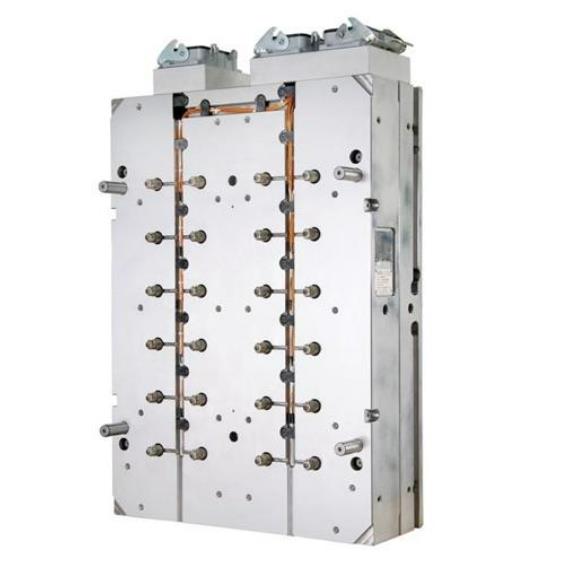
Precision machining is the foundational process for creating components where exacting tolerances, flawless surface finishes, and uncompromising reliability are non-negotiable. In today's advanced manufacturing landscape, it is a sophisticated fusion of high-stability machinery, advanced cutting tools, intelligent software, and deep material science expertise. This guide is designed for manufacturing engineers, product designers, and procurement specialists seeking to understand the capabilities, technologies, and strategic applications of modern precision machining. We will dissect the key technologies, compare machine platforms, and explore how this discipline enables innovation in the world's most demanding industries.
What Defines Precision Machining Today?
Modern precision machining is defined by its capability to consistently produce parts with micron-level tolerances and superior surface integrity. It transcends basic metal cutting to become a controlled, predictable engineering process. The hallmark is repeatability: the ability to produce the 1,000th part with the same exacting specifications as the first. This is achieved through the integration of Computer Numerical Control (CNC), high-rigidity machine tools, environmental controls, and a data-driven approach. It is not merely a subtractive process but a value-adding engineering service critical for prototypes, complex one-offs, and high-volume production of critical components.
How Do CNC, Swiss, and 5-Axis Machines Compare?
The choice of machine platform is dictated by part geometry, required precision, and production volume. Each excels in specific domains.
| Machine Type | Core Principle & Advantage | Ideal Part Characteristics | Typical Tolerance Capability |
|---|---|---|---|
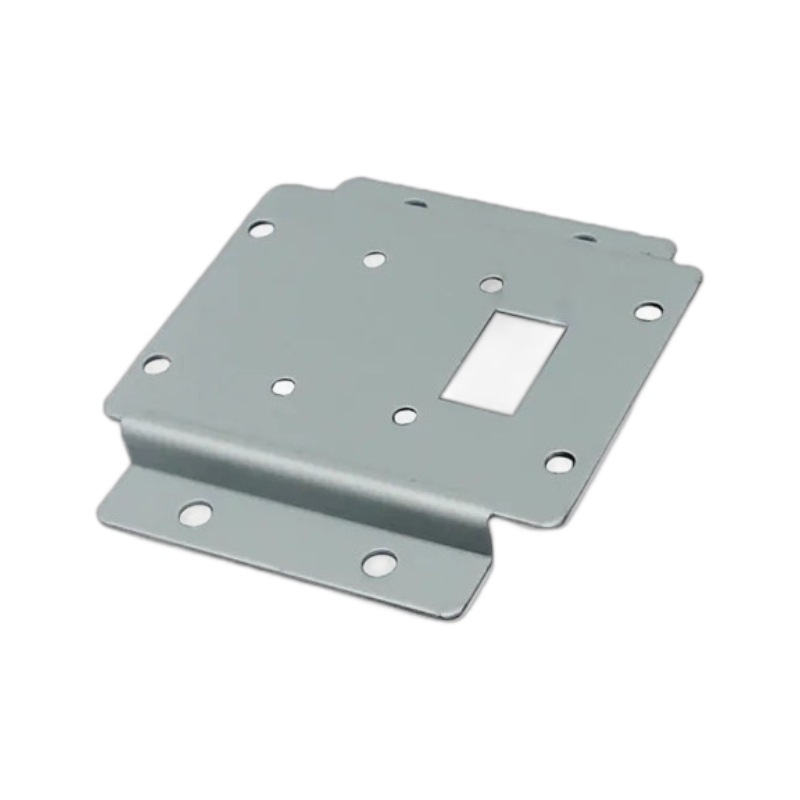
| CNC Milling (3-Axis) | The workpiece is stationary; a rotating cutting tool moves in X, Y, and Z axes. Excellent for complex prismatic parts with pockets, holes, and contours. | Blocks, plates, housings, molds. Parts where all features can be accessed from the top. | ±0.005" (0.127mm) standard; ±0.0005" (0.0127mm) with high-precision setup. |
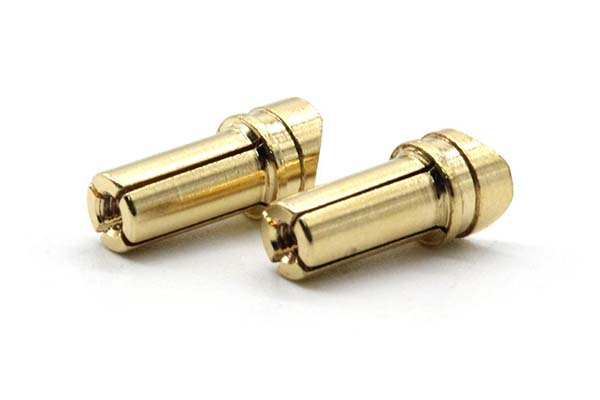
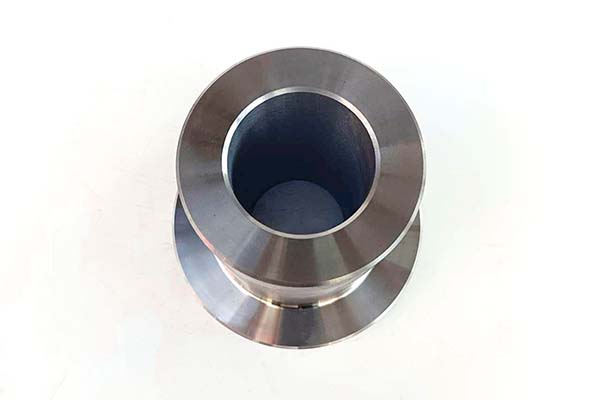
| CNC Turning | The workpiece rotates; a stationary cutting tool shapes it. Supreme for rotationally symmetric parts. High productivity for round features. | Shafts, pins, bushings, connectors, flanges. | ±0.0005" (0.0127mm) on diameters; ±0.001" (0.025mm) on lengths. |
| Swiss-Type Lathe | The workpiece rotates and moves axially through a guide bushing for support right at the cutting point. | Long, slender, small-diameter parts (< 1" dia). Complex, multi-feature parts in one setup. | Exceptional for micro-parts: ±0.0002" (0.005mm) achievable. |
| 5-Axis Machining | The cutting tool can approach the workpiece from any direction via 3 linear + 2 rotary axes. | Complex, monolithic 3D contours (impellers, turbine blades, aerospace structures). | ±0.001" (0.025mm) on complex surfaces; reduces error from multiple setups. |
Professional Insight: For a complex aerospace bracket with compound angles, a 3-axis mill would require multiple time-consuming setups, introducing potential error stack-up. A 5-axis machine completes the entire part in one setup, not only speeding production but also improving overall accuracy by using a single datum reference. This is the key value of simultaneous 5-axis machining.
Which Cutting Tools and Tool Materials Are Best?
The cutting tool is the interface between the machine and the workpiece. Its selection is a science balancing geometry, substrate, and coating.
- Tool Materials:
- Carbide (Tungsten Carbide): The industry standard. Offers an excellent balance of hardness, toughness, and heat resistance. Used for >80% of applications.
- High-Speed Steel (HSS): Tougher but less wear-resistant than carbide. Ideal for interrupted cuts, tapping, and certain alloys.
- Ceramics & CBN (Cubic Boron Nitride): For ultra-hard materials like hardened steels (HRc >45) and superalloys. They can run at very high speeds but are brittle.
- PCD (Polycrystalline Diamond): For highly abrasive non-ferrous materials like carbon-fiber composites, silicon aluminum, and green ceramics.
- Coatings (Applied via CVD/PVD):
- Titanium Nitride (TiN): General-purpose golden coating for improved lubricity.
- Aluminum Titanium Nitride (AlTiN): Excellent for high-temperature machining, provides a thermal barrier.
- Diamond-Like Carbon (DLC): Extremely low friction, ideal for sticky materials like aluminum and plastics.
Case Example: Machining a titanium (Ti-6Al-4V) aerospace component is a classic challenge. Titanium is strong, has low thermal conductivity (heat stays at the cutting edge), and is chemically reactive. The optimal tool is a sharp, uncoated micro-grain carbide end mill with a high helix angle to evacuate chips quickly. Using a high-pressure coolant system (1,000+ PSI) is non-negotiable to break up the chip, control heat, and prevent work hardening. The wrong tool (e.g., a standard AlTiN-coated tool for steel) would fail catastrophically in minutes.
What Tolerances and Surface Finishes Can Be Achieved?
These metrics define the capability envelope of a precision machining provider.
- Tolerances:
- Standard Precision: ±0.005" (0.127 mm). Common for many commercial components.
- High Precision: ±0.001" (0.025 mm). Standard for quality automotive and industrial parts.
- Ultra Precision / Micromachining: ±0.0002" (0.005 mm) or tighter. Required for medical implants, optical components, and fuel system parts. This level often demands climate-controlled rooms (±1°F) to negate thermal expansion.
- Surface Finishes: Measured in micro-inches (µin) Ra (average roughness) or micrometers (µm).
- Machined Finish: 32-125 µin Ra. Visible tool marks.
- Fine Machined: 16-32 µin Ra. Smooth to touch, common for sealing surfaces.
- Precision Ground/Superfinished: < 8 µin Ra. Near-mirror quality, used for bearing surfaces and medical implants. Achieved via secondary processes like grinding or honing.
How Is CAD/CAM Programming Optimized?
The digital thread from design to chip creation is critical. Advanced CAD/CAM software (e.g., Mastercam, Siemens NX, Esprit) is used to create efficient, safe, and accurate toolpaths.
- High-Efficiency Machining (HEM) / Adaptive Clearing: These algorithms maintain a constant tool engagement angle, removing material with a thin chip width but full axial depth. This allows for higher feed rates, reduces tool wear, and minimizes heat generation, which is crucial for maintaining tight tolerances.
- Simulation & Verification: Before any metal is cut, the entire machining process is simulated in 3D to detect collisions, verify toolholder clearance, and ensure the toolpath generates the correct geometry. This is essential for complex 5-axis work.
- Post-Processing: The CAM software generates generic G-code, which is then translated by a machine-specific post-processor into the exact dialect the CNC controller (e.g., Fanuc, Heidenhain, Siemens) understands.
Coolants, Lubricants, and Thermal Management Strategies
Managing heat is paramount in precision machining, as thermal expansion is a primary source of dimensional error.
- Flood Coolant: The most common method. A mixture of water and soluble oil cools the tool/workpiece and flushes chips. Effective but can cause thermal shock if not managed.
- High-Pressure Coolant (HPC) / Through-Tool Coolant: Coolant is forced through channels inside the tool at pressures from 300 to 1,500 PSI. This is critical for deep-hole drilling and machining difficult materials (titanium, Inconel) by breaking chips and cooling at the cutting edge.
- Minimum Quantity Lubrication (MQL): A fine mist of lubricant is delivered directly to the cutting zone. It is a near-dry machining strategy, excellent for aluminum and cast iron, reducing coolant disposal costs and part cleaning complexity.
- Cryogenic Machining: Using liquid nitrogen (LN2) or CO2 as a coolant. It is an emerging technology for superalloys, as it drastically reduces cutting zone temperature and can improve tool life and surface integrity.
How to Select the Right Equipment for Your Application?
The "right" machine is a system that balances part requirements with production economics.
- Analyze Part Geometry & Features: Is it prismatic (needs a mill) or rotational (needs a lathe)? Is it long and slender (needs a Swiss)? Does it have undercuts on multiple sides (needs 5-axis)?
- Determine Required Tolerances & Finish: Ultra-tight tolerances demand machines with high-rigidity construction, linear scales (for direct position feedback, not just motor encoder feedback), and thermal stability compensation.
- Consider Material: Hardened steels or Inconel require machines with high torque and power. Micro-machining of brass requires ultra-high spindle speeds (50,000+ RPM).
- Evaluate Volume: A job shop serving prototypes needs flexible 3- and 5-axis mills. A production cell for connectors needs multi-spindle Swiss lathes and automation.
- Inspect the Auxiliary Systems: The quality of the chip management system, tool presetter, and in-process probing often indicates the shop's commitment to unattended, consistent operation.
Applications in Aerospace, Medical, and Micro-Electronics
- Aerospace: Producing flight-critical components like turbine blades (from Inconel), landing gear parts, and structural airframe components from titanium. Tolerances are often within 0.0005" and require 100% traceability and documentation. 5-axis machining is indispensable here.
- Medical & Surgical: Manufacturing orthopedic implants (knees, hips from cobalt-chrome or titanium) with biocompatible surfaces, surgical instruments with complex jaws, and diagnostic device components. Parts often require micro-machining and finishes below 16 µin Ra to prevent bacterial adhesion.
- Micro-Electronics & Optics: Producing wafer chucks, waveguide components, and precision lens mounts. This realm involves ultra-precision machining and often diamond turning on specialized machines to achieve sub-micron tolerances and optical-grade surface finishes.
Industry Trend: The convergence of additive manufacturing (3D printing) and precision machining into hybrid manufacturing. Complex near-net shapes are 3D printed, and then precision CNC machining is used to achieve final tolerances and critical surface finishes on functional interfaces. This is revolutionizing the production of parts with internal cooling channels or lightweight lattice structures.
Conclusion
Modern precision machining is a dynamic and deeply technical field that sits at the intersection of mechanical engineering, materials science, and software intelligence. Success is no longer just about having a CNC machine; it's about selecting the optimal machine platform, cutting strategy, and thermal management solution for a specific material and geometry. By understanding the capabilities and comparisons outlined in this guide—from Swiss lathes for micro-parts to 5-axis machines for monolithic aerospace structures—engineers and buyers can make informed decisions that ensure part quality, manufacturing efficiency, and project success. In industries where failure is not an option, precision machining is the enabling technology that turns advanced designs into reliable reality.
FAQ
What is the difference between precision machining and micro-machining?
Precision machining is a broad category focused on achieving tight tolerances and fine finishes. Micro-machining is a specialized subset where the feature sizes, tools, and tolerances are on a microscopic scale. It uses tools as small as 0.001" (0.025mm) in diameter and deals with tolerances in the single-digit microns. It often requires specialized machines with ultra-high spindle speeds and exceptional vibration damping.
How does machine rigidity affect precision?
Rigidity is the machine's resistance to deflection under cutting forces. A rigid machine (with a massive, mineral-cast or polymer-concrete base) will not vibrate or bend, allowing for:
- Heavier, more efficient cuts.
- Better surface finish (no chatter marks).
- Tighter, more consistent tolerances as tool deflection is minimized.
Lack of rigidity is a primary limiter of precision in light-duty machines.
What is "lights-out” machining and is it possible for precision work?
"Lights-out" machining refers to unattended, automated operation, often overnight. It is absolutely possible for precision work but requires:
- Robust, proven processes with wide operational windows.
- In-process probing to automatically check parts and adjust tool offsets.
- Automated tool breakage detection.
- Reliable chip and coolant management.
It's the pinnacle of a stable, data-driven precision machining process.
How important is the workholding system in achieving precision?
It is critically important. The workholding (vises, chucks, fixtures) must locate the workpiece accurately and hold it securely without distortion. Poor workholding introduces error and allows the part to move during cutting, destroying accuracy. Precision applications often use custom-machined fixtures and hydraulic or pneumatic clamping for consistent, distributed force.
Can precision machining be used for high-volume production?
Yes, through automated production cells. A cell might consist of a pallet-changing machining center or a multi-spindle Swiss lathe fed by a robotic arm. Once set up and validated, these systems can run 24/7, producing thousands of high-precision parts with minimal human intervention, making precision machining viable for both low-volume custom work and high-volume manufacturing.
Contact Yigu Technology for Custom Manufacturing.
Achieve the highest standards of accuracy and quality with Yigu Technology's advanced precision machining services. Our capabilities span from complex 5-axis milling and Swiss-type turning to ultra-precision micromachining. Equipped with state-of-the-art CNC machines, a comprehensive tooling library, and a climate-controlled metrology lab, we specialize in producing mission-critical components for aerospace, medical, and electronics industries. Our engineering team provides expert CAD/CAM programming and process optimization to ensure your parts meet the most demanding specifications for tolerance, finish, and material integrity. Contact Yigu Technology today to discuss your project requirements and leverage our expertise for your most challenging precision components.