Introduction
Product design has always been about balancing creativity with feasibility. But traditional methods—manual labor, tooling, long lead times—constrained both. Rapid prototyping services have transformed this landscape. They enable designers to translate digital concepts into physical models within hours or days, accelerating iteration, reducing costs, and unlocking design freedom. According to McKinsey, companies using rapid prototyping reduce time-to-market by up to 50% , gaining a competitive edge in dynamic industries. At Yigu Technology, we see this revolution daily. This article explores how rapid prototyping services are revolutionizing product design—covering key technologies, core advantages, and future trends.
What Is the Evolution of Product Design?
Product design has undergone a transformative shift. Traditional methods relied on manual labor and tooling—weeks or months to produce a single prototype. Rapid prototyping leverages technologies like 3D printing, CNC machining, and laser sintering to accelerate the iterative design process.
| Traditional | Rapid Prototyping |
|---|---|
| Manual labor, tooling | Digital, automated |
| Weeks to months for prototypes | Hours to days |
| Expensive design changes | Low-cost iteration |
| Limited design freedom | Complex geometries possible |
What Key Technologies Drive Rapid Prototyping?
| Technology | Process | Applications |
|---|---|---|
| SLA | UV laser cures liquid resin layer by layer | Medical implants, intricate jewelry designs |
| SLS | Laser fuses powdered materials (nylon, metal) | Functional prototypes, aerospace components |
| FDM | Extrudes melted thermoplastic filament | Consumer electronics, educational models |
| LOM | Cuts and bonds thin material layers (paper, plastic) | Large-scale prototypes, architectural models |
What Are the Core Advantages of Rapid Prototyping in Design?
Cost and Time Efficiency
Rapid prototyping eliminates expensive molds and tooling, reducing upfront costs by up to 70% compared to traditional methods.
| Factor | Traditional | Rapid Prototyping |
|---|---|---|
| Tooling | Expensive molds ($10,000–$50,000+) | No tooling required |
| Lead time | Weeks to months | Hours to days |
| Design change cost | High (rework molds) | Low (modify digital file) |
Example: A startup developing a wearable device saved $15,000 by using FDM prototyping instead of injection molding for initial iterations—allowing resources to be allocated to software optimization and market research.
Data: Deloitte found that companies embracing rapid prototyping reduced time-to-market by an average of 42% —leading to increased revenue and customer satisfaction.
Design Freedom and Complexity
Modern rapid prototyping enables geometries previously impossible with subtractive manufacturing.
| Capability | Example | Impact |
|---|---|---|
| Internal channels | Fluid systems | Improved flow efficiency |
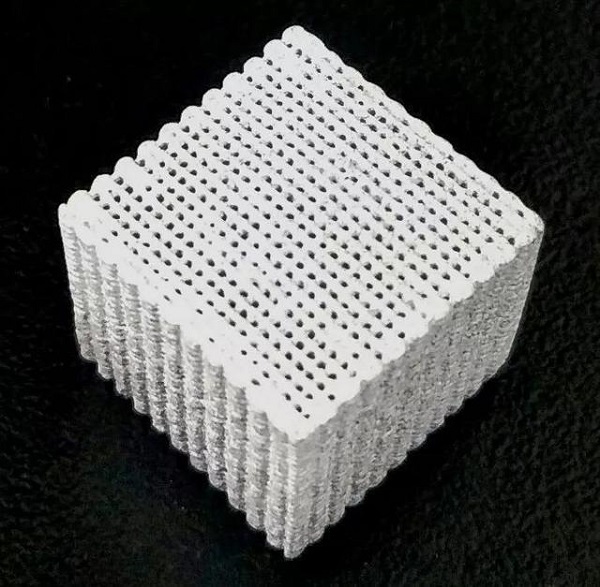
| Lattice structures | Lightweight components | Weight reduction without strength loss |
| Patient-specific implants | CT scan data | Perfect fit, reduced rejection risk |
Aerospace example: Engineers design and manufacture lightweight, high-strength components with intricate internal structures using SLS—reducing aircraft weight, improving fuel efficiency and performance.
Medical example: 3D printing creates patient-specific implants that fit perfectly and integrate seamlessly with the body—reducing rejection risk, improving outcomes.
Functional Testing and Iteration
Physical prototypes validate form, fit, and function. Rapid prototyping enables quick creation of multiple iterations for testing under real-world conditions.
| Benefit | Impact |
|---|---|
| Early flaw detection | Identify and correct design flaws early in development cycle |
| Stakeholder feedback | Gather input from engineers, marketers, end-users |
| Improved quality | Reduce costly rework and recalls |
Case study: Siemens tested 3D-printed turbine blade prototypes—reducing design flaws by 80% before mass production. This improved final product quality and reduced rework and recall costs.
What Do Real-World Examples Demonstrate?
| Industry | Application | Benefit |
|---|---|---|
| Consumer electronics | Wearable device prototypes | Saved $15,000 using FDM vs. injection molding |
| Aerospace | Lightweight components with internal structures | Weight reduction, improved fuel efficiency |
| Medical | Patient-specific implants | Perfect fit, reduced rejection risk |
| Industrial | Turbine blade prototypes | 80% reduction in design flaws before mass production |
What Are the Future Trends?
| Trend | Description |
|---|---|
| AI-driven design optimization | AI analyzes data to generate optimized designs; quickly prototyped |
| Sustainable materials | Eco-friendly, bio-based, recycled materials |
| Integration with digital twins | Virtual and physical prototypes combined |
| More accessible equipment | Affordable, user-friendly systems enable wider adoption |
Prediction: The synergy between rapid prototyping and AI-driven design will create products that are more efficient and sustainable—meeting growing demand for environmentally friendly solutions.
Yigu Technology's Perspective
As a custom manufacturer of non-standard plastic and metal parts, Yigu Technology leverages rapid prototyping services to serve clients across industries.
How we use rapid prototyping:
- Cost and time efficiency: Eliminate tooling; accelerate development cycles
- Design freedom: Complex geometries, internal channels, lattice structures
- Functional testing: Multiple iterations under real-world conditions
- Stakeholder feedback: Involve engineers, marketers, end-users early
Our view: Rapid prototyping democratizes innovation—leveling the playing field for startups and small-to-medium enterprises to compete with industry giants. As technology advances, integration with AI-driven design optimization and sustainable materials will further revolutionize manufacturing.
Conclusion
Rapid prototyping services are revolutionizing product design by:
| Advantage | Impact |
|---|---|
| Cost and time efficiency | Up to 70% cost reduction; 42% faster time-to-market |
| Design freedom | Complex geometries, internal channels, lattice structures |
| Functional testing and iteration | 80% reduction in design flaws before mass production |
| Democratizing innovation | Startups compete with industry giants |
Key technologies:
- SLA: Medical implants, intricate jewelry
- SLS: Functional prototypes, aerospace components
- FDM: Consumer electronics, educational models
- LOM: Large-scale prototypes, architectural models
Real-world impact:
- Startup saved $15,000 on wearable device prototyping
- Aerospace: lightweight components, improved fuel efficiency
- Medical: patient-specific implants, reduced rejection risk
- Siemens: 80% reduction in turbine blade design flaws
Future trends:
- AI-driven design optimization
- Sustainable materials
- Integration with digital twins
- More accessible equipment
Rapid prototyping services are not just a tool—they are a catalyst for innovation. By enabling faster iteration, lower costs, and greater design freedom, they empower designers to create products that are more efficient, sustainable, and responsive to market needs.
Frequently Asked Questions
What is the most cost-effective rapid prototyping technology for small-scale production?
FDM (Fused Deposition Modeling) is often most cost-effective for small-scale production. Equipment costs are low (basic FDM printers from a few hundred dollars); thermoplastic filaments (PLA, ABS) are reasonable. Ideal for startups and small-scale projects with budget constraints.
Can rapid prototyping be used for large-scale industrial production?
Rapid prototyping is primarily for early-stage development. Some technologies (SLS) can be used for small-to-medium-scale production—durable, functional parts; larger-build-volume printers increasing viability. For high-volume mass production, traditional methods (injection molding) remain more cost-effective.
How accurate are rapid prototyping technologies?
Accuracy varies by technology. SLA: High accuracy—layer thickness as low as 0.05 mm; very detailed, precise prototypes. FDM: 0.1–0.4 mm—suitable for functional prototypes, concept models. SLS: Good accuracy—fine details, tolerances acceptable for industrial applications.
What materials can be used in rapid prototyping?
FDM: Thermoplastic filaments—ABS, PLA, PETG, nylon. SLA: Photopolymer resins—standard, tough, high-temperature, biocompatible. SLS: Powders—nylon, glass-filled nylon, TPU, metal powders (aluminum, titanium, stainless steel). LOM: Paper, plastic, metal foils.
How does rapid prototyping reduce time-to-market?
Eliminates expensive molds and tooling—reduce upfront costs. Accelerates design cycles—prototypes in hours or days vs. weeks or months. Enables early detection and correction of design flaws—reduces costly rework. Iterative testing and stakeholder feedback—informed decisions, faster refinement.
Contact Yigu Technology for Custom Manufacturing
At Yigu Technology, we specialize in rapid prototyping and custom manufacturing. Our capabilities include SLA, SLS, FDM, CNC machining, and finishing. We serve aerospace, medical, consumer goods, and industrial sectors.
If you want to revolutionize your product design with rapid prototyping, contact our engineering team. Let us help you reduce costs, accelerate development, and unlock design freedom.