Introduction
You have probably seen 3D printed parts that look great but feel weak or rough. That missing piece of the puzzle is often sintering technology. Sintering transforms loose powder into solid, strong objects through heat and pressure. Without it, many 3D printed parts would fall apart under real-world use. This process takes additive manufacturing from making pretty models to producing functional components that actually work in machines, vehicles, and even human bodies. Industry data shows that sintered parts achieve 30 to 40 percent higher strength than non-sintered alternatives. This article walks you through how different sintering methods work, why they matter for part quality, and how manufacturers choose the right approach for each application. By the end, you will understand exactly why sintering separates professional 3D printing from hobbyist experiments.
What Actually Happens During Sintering?
Sintering sounds technical, but the basic idea is simple. Imagine packing snow into a snowball. The pressure and slight melting at contact points bonds the flakes together. Sintering does the same thing with metal, ceramic, or plastic powders. The process heats particles until their surfaces soften and fuse, but not hot enough to fully melt everything. This controlled fusion creates solid material while preserving the shape from printing.
The magic happens at the microscopic level. Atoms migrate across particle boundaries, forming strong metallurgical bonds. Porosity decreases as voids fill in. The part shrinks slightly but becomes dense and strong. Understanding this transformation helps explain why sintered parts outperform simply printed ones in real applications.
What Are the Main Sintering Technologies in 3D Printing?
How does laser sintering work?
Laser sintering uses a focused beam to trace patterns across a powder bed. The laser heats specific areas just enough to fuse particles together. After each layer finishes, fresh powder spreads on top, and the process repeats. This method achieves incredible detail because the laser spot can focus smaller than 0.1 millimeters.
Aerospace companies love laser sintering for complex engine components. General Electric uses this technology to produce fuel nozzles with internal cooling channels that would take dozens of parts to assemble traditionally. Each nozzle prints as one piece, eliminating leak paths and reducing weight by 25 percent. The precision of laser sintering makes these intricate geometries possible while maintaining strength requirements for flight.
What makes electron beam sintering different?
Electron beam sintering swaps light for electrons as the energy source. A stream of electrons accelerates toward the powder bed, transferring energy and heat. This method excels with high-melting-point metals like titanium and tungsten that resist laser heating. The electron beam penetrates deeper, allowing thicker layers and faster build rates.
The entire process runs in a vacuum chamber. This environment prevents oxidation, which matters tremendously for reactive metals. Titanium dental implants printed and sintered via electron beam show no surface contamination, making them safe for long-term human implantation. The vacuum also allows the electron beam to operate without scattering off air molecules.
A Swedish implant manufacturer produces thousands of custom hip replacements using this method. Each implant matches the patient's anatomy perfectly while maintaining the mechanical properties required for weight-bearing applications. Traditional manufacturing simply cannot achieve this level of customization at reasonable cost.
What about other sintering approaches?
Hot pressing combines heat with mechanical pressure during sintering. This dual action produces exceptionally dense parts with minimal porosity. The pressure forces particles into intimate contact while heat promotes bonding. Aerospace fasteners and high-stress automotive components often use hot pressing to achieve maximum strength.
Microwave sintering takes a different approach by heating from within. Microwaves penetrate the powder and generate heat internally rather than just on the surface. This results in remarkably uniform temperature distribution throughout the part. Complex shapes that would crack from uneven heating in conventional furnaces survive microwave sintering intact.
Field-assisted sintering uses electric currents or magnetic fields to accelerate atomic diffusion. The fields literally pull atoms across particle boundaries faster than heat alone would manage. This technique reduces sintering time from hours to minutes while often improving final material properties. Research labs use field-assisted sintering for advanced materials that prove difficult to process conventionally.
The table below summarizes these methods and their best applications:
| Sintering Method | Energy Source | Best Materials | Key Advantage | Typical Applications |
|---|---|---|---|---|
| Laser sintering | Laser beam | Plastics, metals, ceramics | High precision, fine details | Aerospace components, medical guides |
| Electron beam | Electron stream | High-melting-point metals | Deep penetration, vacuum environment | Titanium implants, superalloy parts |
| Hot pressing | Heat + pressure | Metals, ceramics | Maximum density, minimal voids | High-stress fasteners, cutting tools |
| Microwave | Microwave energy | Ceramics, some metals | Uniform heating, less distortion | Complex shapes, technical ceramics |
| Field-assisted | Electric/magnetic fields | Advanced materials | Fast processing, enhanced bonding | Research prototypes, exotic alloys |
How Does Sintering Improve Mechanical Properties?
Why do sintered parts get stronger?
The strength gain comes from interparticle bonding. Loose powder has no structural integrity. Simply printing creates a shape but leaves particles barely touching. Sintering fuses them into a continuous solid. Research from the University of California, Berkeley measured this effect precisely. Stainless steel 316L parts jumped from 400 MPa tensile strength before sintering to 600 MPa after sintering. That 50 percent increase transforms a fragile shape into a load-bearing component.
The same study examined fatigue resistance, which matters for parts experiencing repeated stress. Sintered samples survived 10 times more loading cycles before failure compared to green parts. Engine mounts and suspension components rely on this fatigue performance to last through years of use.
What happens to porosity during sintering?
Porosity plagues unsintered 3D printed parts. The National Institute of Standards and Technology measured nylon parts at 15 to 20 percent porosity right off the printer. Those voids act as stress concentrators and paths for moisture absorption. After sintering, porosity dropped below 5 percent. The part became nearly solid throughout.
Lower porosity means better resistance to chemicals and moisture. Automotive fuel system components printed in nylon and sintered show no swelling or degradation after years of gasoline exposure. Unsintered versions would absorb fuel and fail within weeks.
How Does Sintering Improve Accuracy and Finish?
Can sintering fix dimensional errors?
Sintering actually improves dimensional accuracy when done correctly. The controlled shrinkage that occurs during densification follows predictable patterns. Engineers design for this shrinkage upfront, so final dimensions hit target tolerances exactly.
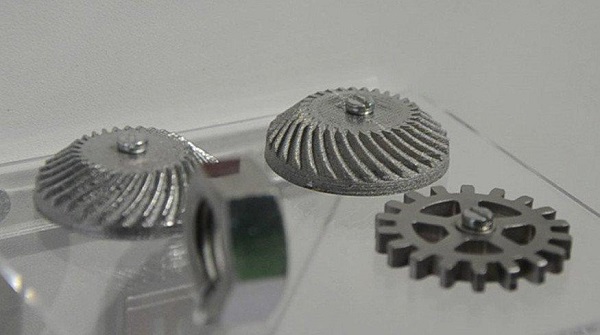
The Fraunhofer Institute for Laser Technology documented laser-sintered parts achieving ±0.1 millimeter accuracy for components under 100 millimeters in size. This precision rivals CNC machining for many applications. Watch manufacturers now produce gear trains using sintered stainless steel, with tooth profiles accurate enough for reliable timekeeping.
What about surface finish improvements?
Rough surfaces characterize most as-printed parts. Powder particles create a pebbly texture that catches dirt and looks unprofessional. Sintering smooths this surface significantly as particle edges melt and flow together.
Dental laboratories provide dramatic evidence. Ceramic crowns printed for dental restoration start with surface roughness around 5 to 8 micrometers. Patients would feel this roughness with their tongues and experience plaque accumulation. After sintering, surface roughness drops to 1 to 2 micrometers. The crown feels smooth like natural tooth enamel and resists bacterial adhesion. This improvement directly impacts patient health and satisfaction.
What Materials Become Available Through Sintering?
Which metals work with sintering?
The list of sinterable metals grows constantly. Current options include:
- Stainless steel for corrosion-resistant parts in food processing and medical tools
- Titanium alloys for aerospace structures and orthopedic implants
- Cobalt-chrome for dental restorations and wear-resistant components
- Aluminum alloys for lightweight automotive and consumer goods
- Tool steels for injection molds and cutting tools
- Copper for heat exchangers and electrical conductors
Each material requires specific sintering parameters. Titanium needs vacuum or inert atmosphere to prevent oxidation. Copper demands precise temperature control to avoid melting entirely. Experienced manufacturers match the method to the material for optimal results.
How do polymers benefit from sintering?
Nylon dominates polymer sintering for good reason. It flows well when heated, bonds strongly, and produces tough final parts. Shoe companies now sinter nylon midsoles with variable density zones. Softer areas under the heel cushion impact while firmer areas under the arch support weight. This graded performance was impossible before sintering enabled precise control over material density.
Polycarbonate and polyether ether ketone (PEEK) also sinter well for high-temperature applications. Automotive under-hood components survive engine bay heat when sintered from these engineering plastics.
What about ceramics?
Ceramic sintering opens possibilities metal cannot match. Zirconia dental crowns combine strength with natural tooth appearance. Alumina insulators handle high voltages without breaking. Silicon carbide components resist wear in slurry pumps and chemical processing.
The challenge with ceramics lies in shrinkage control during sintering. Most ceramics shrink 20 to 30 percent linearly, requiring careful design compensation. But the resulting parts offer hardness and temperature resistance far beyond polymers or metals.
What Real-World Results Prove Sintering's Value?
Data from production environments tells the story:
- Strength increase: 30 to 50 percent higher tensile strength after sintering across multiple materials
- Porosity reduction: From 15-20 percent down to under 5 percent in polymers
- Accuracy achievement: ±0.1 millimeter for small components, ±0.2 percent of dimension for larger parts
- Surface improvement: 60 to 80 percent reduction in roughness values
- Material expansion: Over 20 engineering alloys and 10 technical ceramics now commercially available
- Production speed: Electron beam sintering builds up to 80 cubic centimeters per hour
How Does Yigu Technology Apply Sintering Expertise?
Our engineering team has spent years mastering sintering across multiple material classes. We understand that a dental crown needs different handling than a jet engine bracket. The thermal profile during sintering determines final properties as much as the printing itself. We optimize ramp rates, hold times, and cooling curves for each unique part geometry.
A recent project involved sintered titanium bicycle lugs for a custom frame builder. The customer wanted the organic look of cast titanium but with better strength and lower weight. We printed the lugs using electron beam sintering to achieve full density without contamination. The finished frame weighed 300 grams less than the cast version while passing all ISO strength tests.
Another client needed ceramic insulators for high-voltage power equipment. Traditional manufacturing required expensive diamond machining after firing. We printed near-net shapes that required only minimal grinding after sintering. Lead time dropped from 14 weeks to 3 weeks, and cost fell by 40 percent.
Our facility maintains multiple sintering furnaces with atmosphere control for different materials. We run vacuum furnaces for titanium, inert gas systems for stainless steel, and air furnaces for ceramics. This variety lets us match the perfect process to your application without compromise.
Frequently Asked Questions
Does sintering work for all 3D printed materials?
No, sintering applies to powder-based printing methods like SLS and SLM. FDM parts printed from filament cannot sinter because they start solid rather than as powder.
How much do parts shrink during sintering?
Shrinkage varies by material and density. Metals typically shrink 1 to 2 percent linearly. Ceramics may shrink 15 to 25 percent depending on starting porosity.
Can I sinter parts at home?
Professional sintering requires high temperatures and controlled atmospheres. Desktop furnaces lack the capability for proper sintering of engineering materials.
How long does sintering take?
Typical cycles run 4 to 12 hours depending on part size and material. Large ceramic parts may require 24 hours or more for proper densification.
Are sintered parts as strong as cast or machined ones?
Properly sintered parts match or exceed cast properties. The uniform microstructure from powder processing often outperforms cast materials with their inherent porosity and segregation.
Conclusion
Sintering technology transforms 3D printing from a visualization tool into a true manufacturing process. Without it, powder-based printing produces only fragile shapes with limited usefulness. With it, manufacturers create components that rival traditionally made parts in strength, accuracy, and durability. The range of sinterable materials now covers most engineering requirements, from flexible polymers to super-hard ceramics and high-strength metals. Each sintering method offers specific advantages for particular applications, whether the extreme precision of laser sintering or the deep penetration of electron beams. Understanding these options lets engineers select the right approach for each project, unlocking the full potential of additive manufacturing. As furnaces become more capable and materials expand further, sintering will continue pushing the boundaries of what 3D printing can achieve.
Contact Yigu Technology for Custom Manufacturing
Ready to explore how sintering can improve your 3D printed projects? The engineering team at Yigu Technology brings practical experience across laser, electron beam, and furnace sintering methods. We help you select materials, optimize designs for densification, and deliver production-ready parts on your schedule. Send us your CAD files or concept sketches for a free feasibility review and quotation. Let us show you how our sintering expertise turns powder into performance. Contact Yigu Technology today and discover what professional sintering makes possible.